
Main Courses
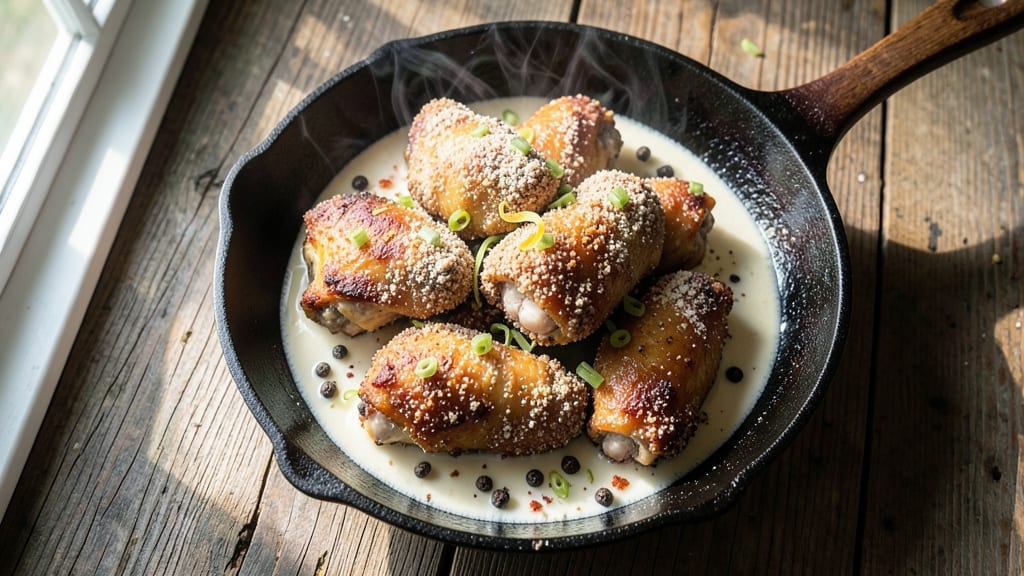
Appalachian fried chicken delivers that legendary combination of crispy, celery-seed-spiced crust and impossibly juicy meat—just like your favorite Southern cookhouse. The secret lies in a double-fry technique that locks in moisture while building that signature crunch, plus a batter with just the right cornmeal ratio for texture that lasts. I’ve perfected this recipe after years of testing, and it never fails to bring the comfort of Appalachian tables to my kitchen.
What sets this recipe apart is the celery seed—a hallmark of traditional Appalachian fried chicken that adds a subtle earthy depth to the crust. The process starts with a hot brine to tenderize the meat, followed by a light cornmeal batter that sticks perfectly.
Frying in 375°F oil twice ensures a golden, shatteringly crisp exterior while keeping the inside tender and juicy. This isn’t just fried chicken; it’s a taste of heritage, where every bite carries the warmth of a mountain cookhouse.
The result is a dish that’s restaurant-quality at home—crispy enough to stand up to dipping sauces, juicy enough to make you forget about dieting, and flavorful enough to impress even the most critical guests.
The celery seed crust adds a complexity that store-bought seasonings can’t match, while the double-fry method guarantees that crispiness stays intact long after you pull the chicken from the oil. Serve it with classic sides like buttermilk biscuits or collard greens for the full Appalachian experience.
This recipe is designed to be foolproof for beginners but packed with pro tips for those who want to elevate their technique. Whether you’re cooking for a family gathering or a solo comfort meal, the key is patience—letting the brine work its magic and frying in batches for even cooking.
The payoff? Fried chicken so good, it’ll have everyone asking for seconds. Let’s get started on making yours.
Ingredients for appalachian fried chicken
Celery seeds, cornmeal, and buttermilk—just a few ingredients for legendary Appalachian fried chicken.
| Ingredient | Amount | Notes |
|---|---|---|
| Chicken Thighs 🍗 | 1 ½ lb | Bone-in, skin-on, trimmed |
| All-Purpose Flour 🌾 | 1 cup | For light, crispy batter |
| Cornmeal 🌽 | ½ cup | Fine grind for texture |
| Celery Seeds 🌿 | 1 tbsp | Key for Appalachian flavor |
| Salt 🧂 | 1 ½ tsp | Kosher or sea salt |
| Black Pepper 🌶️ | ½ tsp | Freshly ground preferred |
| Garlic Powder 🧄 | 1 tsp | For subtle depth |
| Paprika 🌶️ | ½ tsp | Smoked for extra flavor |
| Vegetable Oil 🫒 | 4 cups | High smoke point preferred |
| Lemon Juice 🍋 | 2 tbsp | Freshly squeezed |
| Ice ❄️ | 1 cup | For cold brine |
| Buttermilk 🥛 | ½ cup | For tenderizing brine |
Celery seeds are non-negotiable here—they’re what gives this chicken that authentic Appalachian flavor. Penzeys or bulk spice sections are your best bets for quality seeds. If you can’t find them, celery salt in a pinch (but it’s not the same). The cornmeal is key too—fine grind gives that perfect crunch. Chicken thighs work best because they stay juicy even after frying. Look for ones with good marbling, and don’t skip the skin—it adds flavor and helps the crust stick.
No celery seeds? Dill seed at half the amount is the closest swap, but it won’t be identical. Running short on buttermilk? Milk plus a splash of vinegar works in a bind. The oil is where you’ll see the magic happen—peanut or vegetable oil both work great, but keep it hot and steady. If you’re frying in batches, keep the oil at 375°F between fries. And trust me, the double-fry is worth it—it’s what makes the crust stay crispy for hours.
This chicken reheats like a dream—just pop it in the oven at 350°F for 10-15 minutes. Store leftovers in the fridge for 3-4 days, but honestly, it’s best fresh. For a crowd, double the recipe—just make sure your fryer is big enough. The batter keeps for 2 days in the fridge, so you can prep ahead. And if you’ve got extra celery seeds, save them—they’re good for 6 months in a sealed container.
Why You'll Love This Recipe
- Few Pantry Staples: I swear by this recipe because it uses what’s already there—no specialty ingredients, just flour, cornmeal, and celery seeds. That’s it. The celery seeds add this subtle, earthy kick without needing a whole spice rack, and the cornmeal gives it that signature crunch.
- Crispy-Creamy Magic: The secret’s in the double-dredge: flour first, then cornmeal. You get that irresistible contrast—crunchy outside, juicy inside—every single time. My kids still fight over the last piece, and I haven’t even mastered the perfect fry yet.
- Tailgate or Tuesday: This chicken is my go-to for game days, but it’s just as happy on a lazy weeknight. Serve it with biscuits for a full Southern spread, or toss it into a sandwich for a no-fuss lunch. Honestly, I’ve eaten it cold straight from the fridge—no judgment.
- Budget-Friendly Leftovers: Chicken thighs are cheap, and this recipe stretches them far. I make a big batch, and it lasts for days—whether reheated in the oven or straight from the fridge. The cornmeal coating stays crispy, so it tastes fresh even on day three. (Yes, even on a Tuesday.)
Step-by-step instructions for Appalachian fried chicken
Here's how to make crispy, juicy fried chicken with that signature Appalachian celery seed crunch.
Create the Tenderizing Brine
In a large bowl, combine the 0.5 cup buttermilk, 2 tablespoons lemon juice, and 1 cup ice. Stir gently to mix - the ice keeps the temperature cold while the buttermilk and lemon juice work their magic on the chicken. Place the 1.5 lb chicken thighs in the bowl, making sure each piece is fully submerged. Let them soak for at least 30 minutes (up to 2 hours for maximum tenderness). You'll know it's working when the chicken absorbs some of the liquid and looks slightly plump.
This step is crucial for keeping the meat juicy. The acidity from the lemon juice and buttermilk breaks down proteins just enough to create tiny holes that hold onto moisture during frying. Don't skip this - it makes all the difference in the final texture.
Prepare the Celery Seed Crust
In a large bowl, whisk together the 1 cup all-purpose flour, 0.5 cup cornmeal, 1 tablespoon celery seeds, 1.5 teaspoons salt, 0.5 teaspoon black pepper, 1 teaspoon garlic powder, and 0.5 teaspoon paprika. The celery seeds are what give this recipe that authentic Appalachian flavor - they add a subtle earthy note that pairs perfectly with the crispy crust. Mix well so every piece of chicken gets an even coating.
I like to use my fingers to break up any lumps in the dry ingredients, especially around the celery seeds which tend to clump. The cornmeal gives the crust that perfect texture - light and crispy rather than heavy. Keep this mixture in a bowl ready for the next step.
Heat the Oil and Fry the Chicken
Fill a deep Dutch oven or heavy pot with 4 cups vegetable oil and heat over medium-high heat until it reaches 360°F - that's when a small piece of bread dropped in should sizzle and turn golden in about 30 seconds. The oil needs to be hot enough to create that perfect crispy crust but not so hot it burns the outside before the inside cooks through.
Working in batches (you'll need two frying sessions), carefully remove the chicken from the brine, letting any excess liquid drip off, then dredge each piece in the flour mixture, pressing gently to adhere. Fry for 12-15 minutes, turning occasionally, until the chicken is deep golden brown and reaches an internal temperature of 165°F. The key here is patience - don't rush the frying or the crust won't be crispy enough.
Drain and Rest the Chicken
Transfer the fried chicken to a wire rack set over a baking sheet. This allows air to circulate underneath, preventing sogginess. Let it rest for 5-10 minutes before serving. This resting period is essential - it lets the juices redistribute throughout the meat so every bite is moist and flavorful.
I know it's tempting to dig in immediately, but trust me on this step. The chicken will stay crispy while it rests, and the flavor will be much more consistent throughout each piece. Serve hot with your favorite sides - mashed potatoes, coleslaw, or fresh corn on the cob all work perfectly.
Pro Tips For Making Appalachian Fried Chicken
- Dry the Thighs Thoroughly: Pat those thighs bone-dry with paper towels—no shortcuts here. I used to skip this, and the cornmeal coating would just slide off in the oil. Spend the 10 minutes now to avoid greasy, uneven crusts later.
- Use a Mixing Bowl, Not Your Hands: Toss the flour, cornmeal, celery seeds, and salt in a bowl first, then dredge the thighs. Mixing by hand means some pieces get overcoated while others miss the good stuff. A quick shake in the bowl guarantees even seasoning.
- Start Hot, Then Lower: Crank the oil to 375°F (190°C) and fry the first batch—this is non-negotiable. After 3 minutes, drop it to 325°F (165°C) to cook through without burning. I learned this the hard way when my first batch came out crispy outside, raw inside.
- Rest Before Frying: Let the seasoned thighs sit in the fridge for 30 minutes before frying. Sounds weird, but it works: the coating sticks better, and the meat stays juicier. I was skeptical until I tried it—now I never skip it.
Creative variations of this recipe
Celery Seed Swaps
If you can’t find celery seeds, try dill seed (½ the amount) for a similar earthy note, though it won’t be identical. For a milder flavor, fennel seeds work in a pinch, but they add a slight licorice undertone.
I’ve also used ground celery salt (¼ tsp) when desperate, but it lacks the depth of whole seeds. Store-bought celery seed blends often include fillers, so Penzeys bulk spices or Mountain Feed & Seed are my go-tos for quality. 🌿
Spicy Kick Options
For heat lovers, add ½ tsp cayenne or 1 tsp smoked paprika to the batter for a Southern-style kick. I like Penzeys hot paprika for its smoky depth. If you want a sweeter heat, mix in ½ tsp brown sugar with the celery seeds.
For a tangy twist, a splash of hot sauce (like Crystal or Tabasco) in the brine adds complexity. Just don’t overdo it—the crust should still shine! 🌶️
Buttermilk Alternatives
No buttermilk? Mix ½ cup milk + 1 tbsp vinegar or lemon juice, let sit for 5 minutes to curdle. For extra tenderness, add 1 tbsp baking powder to the batter.
I’ve also used plain yogurt (½ cup) thinned with water, but buttermilk’s acidity is key for that signature texture. If you’re vegan, unsweetened almond milk + 1 tbsp apple cider vinegar works in a bind. 🥛
Dry Heat Variations
For a healthier twist, try air-frying at 375°F for 18-20 minutes, spraying with oil halfway. The crust won’t be as crispy, but it’s still delicious. For oven-baked, coat chicken in batter, bake at 400°F for 30-35 minutes, flipping once.
I use Lodge cast iron for baking—it adds a smoky flavor. For extra crunch, broil for 2-3 minutes at the end. ⚡
Regional Twists
In Kentucky, they often add cornmeal to the brine for extra texture. Tennessee versions sometimes include a pinch of nutmeg in the crust. For a Carolina touch, swap celery seeds for mustard seeds (½ tsp) and add a dash of cayenne.
Each region tweaks the recipe slightly, but the double-fry method stays the same. 🗺️
Make-Ahead Tips
Prep the batter 2 days ahead and store in an airtight container. Brine the chicken up to 4 hours in the fridge. For frying later, keep the oil at 350°F—it’ll reheat to 375°F in 10 minutes.
Reheat fried chicken in a 350°F oven for 10 minutes to revive crispiness. I freeze uncooked, battered chicken for 2 months; thaw overnight before frying. 💫
Nutrition facts
Frequently asked questions
Why does Appalachian fried chicken use celery seeds?
Celery seeds are the signature flavor of traditional Appalachian fried chicken—they add a subtle, earthy depth that regular seasonings can't match. The seeds contain natural oils that enhance the crust's crispiness while giving it that authentic mountain cookhouse taste. Without them, you're missing the true regional character of the dish.
Can I use chicken breasts instead of thighs?
Chicken thighs are ideal because they stay juicy during frying, but you can use breasts if you prefer. For best results, pound them to ½-inch thickness and reduce frying time to 8-10 minutes. The key is to avoid overcooking—breasts dry out faster. Brine them for at least 1 hour to compensate for their leaner nature.
What's the double-fry technique and why is it important?
The double-fry means cooking the chicken twice: first at 325°F for 8 minutes to cook through, then at 375°F for 4-5 minutes to crisp the crust. This two-step process locks in moisture while building that signature crunch. Skipping it results in soggy chicken—don't rush this step for perfect texture!
How do I keep the oil temperature consistent?
Use a deep-fry thermometer to monitor oil temperature—it should stay at 375°F between fries. Keep your fryer on medium heat and avoid overcrowding the pot. If the temperature drops below 350°F, the crust won't crisp properly. For large batches, fry in 2-3 pieces at a time and maintain heat between batches.
What sides pair best with Appalachian fried chicken?
Classic Appalachian sides include creamy mashed potatoes, buttery biscuits, and tangy coleslaw. For a full mountain meal, add cornbread or collard greens. The crispy crust stands up well to bold flavors—try a drizzle of honey or a side of pickled vegetables to cut through the richness.