
Sauces & Condiments
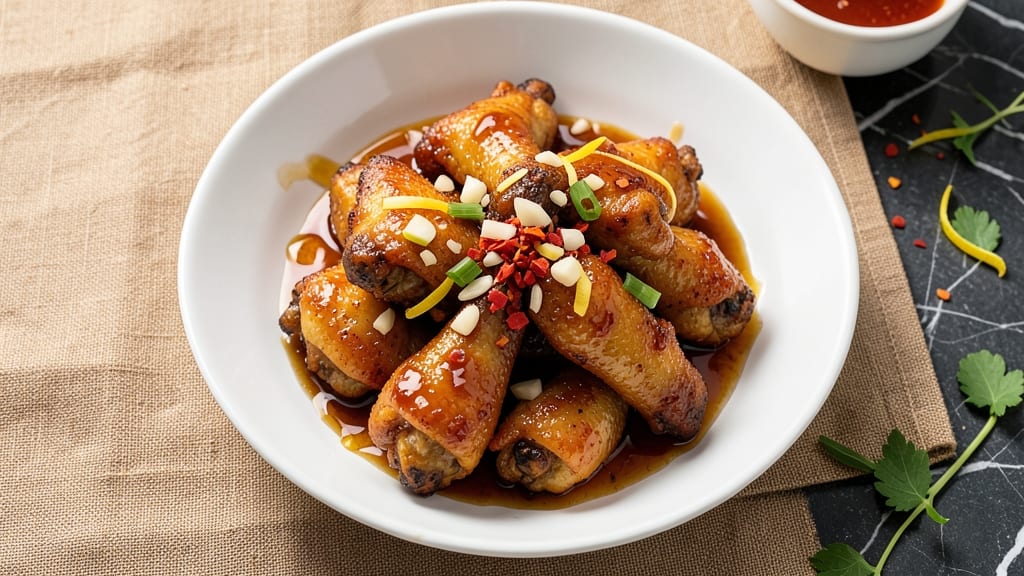
This Asian chicken wing sauce recipe delivers the perfect balance of bold umami and sweet heat that transforms ordinary wings into restaurant-quality bites. The secret lies in a carefully reduced sauce with deep caramelized flavors from honey and soy, enhanced by aromatic ginger and garlic.
What sets this apart is the controlled reduction process that intensifies the sauce's depth without losing its glossy finish.
With just eight simple ingredients—soy sauce, honey, rice vinegar, garlic, ginger, chili flakes, sesame oil, and a touch of cornstarch—you'll create a sauce that's both complex and foolproof. The sauce thickens beautifully when tossed with wings, creating a sticky, flavorful crust that clings perfectly.
Professional results come from precise timing during the reduction phase, where flavors meld together into a cohesive, addictive glaze.
The final sauce should be glossy with a velvety texture that coats wings evenly, offering a perfect harmony of sweet, savory, and spicy notes. This versatile sauce works equally well for wok-tossed wings, baked wings, or even as a dipping sauce.
The best part? It keeps well in the refrigerator for up to two weeks, allowing you to make a big batch for multiple meals.
Once you taste the difference between this homemade sauce and store-bought versions, you'll never go back. The depth of flavor and the perfect balance of sweetness and heat make this sauce a game-changer for any wing lover.
Let's get started on creating your signature sauce that will have everyone asking for seconds.
Ingredients for asian chicken wing sauce
Eight ingredients combine to create a restaurant-worthy sauce that turns wings into addictive bites.
| Ingredient | Amount | Notes |
|---|---|---|
| Light Soy Sauce 🥢 | ½ cup | Use high-quality for depth |
| Raw Honey 🍯 | ⅓ cup | Thick variety for better caramelization |
| Rice Vinegar 🍶 | ¼ cup | White or seasoned preferred |
| Fresh Garlic Cloves 🧄 | 6 cloves | Minced for aromatic punch |
| Fresh Ginger 🌿 | 1 ½ tbsp | Finely grated, no zest |
| Red Chili Flakes 🌶️ | 1 ½ tbsp | Adjust for heat preference |
| Toasted Sesame Oil 🫒 | 1 ½ tbsp | Not regular sesame oil |
| Cornstarch 🌾 | 1 ½ tbsp | For perfect glossy finish |
The soy sauce and honey are your flavor anchors. Kikkoman soy sauce or Lee Kum Kee delivers that authentic umami punch, while raw honey (like Manuka or local varieties) caramelizes beautifully. Grab a small jar of rice vinegar from the Asian section—Koyo or Sushi Rice Vinegar are my go-tos. Fresh ginger and garlic are non-negotiable here; the frozen stuff just won't cut it. For the chili flakes, Lao Gan Ma from the international aisle adds that perfect smoky heat. Toast your sesame oil in a dry pan for 30 seconds first—that nutty aroma makes all the difference.
No soy sauce? Coconut aminos works in a pinch (though it's sweeter). Ran out of honey? Maple syrup or agave gives similar caramel notes, but reduce the sauce longer. Fresh ginger too fibrous? Powdered ginger at half the amount saves the day. The cornstarch is critical—arrowroot powder works too, but cornstarch gives that classic glossy finish. Substituting? Xanthan gum at 1/4 tsp is a pro move for extra sheen. And if you're feeling fancy, add 1 tsp fish sauce for deeper umami (skip if vegetarian).
This sauce keeps beautifully—up to 2 weeks in the fridge, sealed in a jar. The flavors actually improve overnight as everything melds. For longer storage, freeze in ice cube trays—perfect portions for future wing nights. Reheat gently in a saucepan over low heat, stirring constantly. Pro tip: Add 1 tsp water when reheating to restore that glossy texture. Double the batch—trust me, you'll want leftovers.
Why You'll Love This Recipe
- Pantry Magic: I swear by this sauce because it uses stuff I already have—no specialty shopping needed. That light soy, honey, and vinegar combo? It’s the kind of balance that turns a simple weeknight into a flavor win without extra effort.
- Umami Bomb: The garlic and ginger hit like a flavor tsunami, but in the best way. That crisp-tangy edge from the rice vinegar? It’s the secret that makes these wings taste like they came from a dim sum cart, not my kitchen.
- Game for Any Occasion: Between us, I use this sauce on everything—wings, tofu, even grilled shrimp for date night. It’s the one sauce that works for lazy Tuesdays and when I’m pretending to be fancy for guests. (Yes, even on a Tuesday night.)
- Leftovers That Don’t Suck: Honestly, this sauce keeps for days in the fridge, and it only gets better. I double the batch, toss it on pre-cooked wings, and reheat them straight from the freezer—crispy, sticky, and still packed with flavor. No sad, dry leftovers here.
Step-by-step instructions for Asian chicken wing sauce
Here's how to create a perfectly balanced sauce that delivers sticky-sweet, umami-packed flavor every time.
Mince Garlic and Grate Ginger
Peel the 6 cloves fresh garlic cloves and finely mince them using a sharp knife or microplane. You want tiny, almost paste-like pieces that will infuse the sauce with deep aromatic flavor. Set aside in a small bowl.
Using the same tool, grate the 1.5 tablespoons fresh ginger into a fine paste, avoiding any fibrous bits. The ginger should be smooth and pale yellow. I like to press it through a mesh strainer to remove any stubborn fibers that can make the sauce bitter. This prep work ensures your sauce develops maximum flavor without any unpleasant textures.
Combine Wet Ingredients
In a medium saucepan, whisk together the 0.5 cup light soy sauce, 0.33 cup raw honey, and 0.25 cup rice vinegar. Heat over medium-low heat until the mixture reaches a gentle simmer, about 3-4 minutes. You'll notice the honey begin to dissolve and the mixture take on a golden hue.
This is where the magic starts. The vinegar adds brightness while the honey begins caramelizing slightly, creating that signature sticky quality. Keep the heat low to prevent the mixture from boiling vigorously—we want gradual flavor development, not a rapid reduction.
Add Aromatics and Toasted Sesame Oil
Once the wet ingredients are simmering gently, add the minced garlic and grated ginger. Stir constantly for 1-2 minutes until the garlic becomes fragrant and the raw ginger aroma disappears. The mixture should smell rich and complex—like a cross between a sweet-and-sour glaze and a spicy stir-fry.
Reduce heat to low and stir in the 1.5 tablespoons toasted sesame oil. This is the secret weapon that adds depth and nutty richness. The oil should coat the back of a spoon, indicating it's properly emulsified. If you notice any separation, whisk vigorously to combine—this ensures a smooth, glossy finish on your wings.
Incorporate Chili and Thicken
Add the 1.5 tablespoons red chili flakes and stir for 30 seconds to distribute evenly. The sauce should take on a beautiful reddish hue. This is where you can adjust the heat level—add more if you crave spice, or reduce slightly if you prefer mild flavor.
In a small bowl, whisk the 1.5 tablespoons cornstarch with 2 tablespoons water until completely dissolved. Slowly pour this slurry into the sauce while stirring constantly. The sauce will begin to thicken immediately—keep stirring for 2-3 minutes until it reaches a glossy, syrupy consistency that coats the back of a spoon. It should be thick enough to cling to wings but still flow smoothly.
Simmer to Perfection
Continue simmering the sauce on low heat for 5-7 minutes, stirring occasionally. You're looking for a sauce that's fully reduced and has a beautiful sheen—this indicates proper thickening and flavor concentration. The aroma should be intoxicating: sweet, tangy, umami-rich with just a hint of spicy heat.
Remove from heat and let it cool slightly before using. This resting period allows the flavors to meld completely. For best results, use the sauce immediately on freshly cooked wings, tossing them in the hot pan to create that perfect sticky-sweet glaze. The sauce keeps well in the refrigerator for up to 5 days, though it's best used fresh for maximum flavor impact.
Pro Tips For Making Asian Chicken Wing Sauce
- Simmer Low and Slow: This sauce isn’t a race—after combining soy sauce, honey, and vinegar, reduce heat to the lowest setting and let it bubble for 10-12 minutes. I used to blast it on high and ended up with a bitter, syrupy mess that stuck to the pan like glue. The magic happens when the flavors meld gently, not when they fight for dominance.
- Peel and Mince Ginger Fast: Use a spoon to scrape off just the pale inner layer of ginger—no need to peel the whole root. Then, finely mince it with the flat side of your knife (no julienne required). Over-mincing turns it into mush, and skipping the peel means gritty texture. Trust me, this is where lazy prep backfires.
- Balance the Honey First: Taste the raw honey before adding it to the sauce—some batches are sweeter than others. If it’s too thick, thin it with a splash of warm water before mixing. I learned this after making a sauce so cloyingly sweet that my guests refused seconds. The vinegar and soy need room to play.
- Toast the Garlic Early: Sauté the garlic in oil for 30 seconds until fragrant but not brown—this prevents it from turning bitter in the sauce. Add it right when you start heating the soy and vinegar, then remove it immediately after. Overcooking it turns the whole dish into a sad, ashy memory. (Yes, I’ve done it.)
Troubleshooting this dish
Sauce Too Thin?
If your sauce isn't thickening enough, you likely didn't reduce it long enough or your cornstarch slurry wasn't fully incorporated. For a quick fix, whisk 1 tsp cornstarch with 1 tbsp water and stir into the simmering sauce for 1-2 minutes until it thickens.
I've found that using arrowroot powder instead of cornstarch gives a smoother finish—just use 1 tsp instead of 1.5 tbsp. 💡
Sauce Too Thick?
Over-thickened sauce happens when you reduce it too long or add too much cornstarch. Thin it by stirring in 1 tsp water or rice vinegar at a time until you reach the desired consistency.
For a glossy finish, add ½ tsp toasted sesame oil to help restore that silky texture. If it's still too stiff, gently reheat and whisk in 1 tsp honey to balance the thickness.
Grainy Texture?
This usually means your garlic or ginger wasn't minced finely enough or your cornstarch wasn't fully dissolved. Next time, press the minced garlic and ginger through a fine-mesh strainer to remove any fibers. For the cornstarch, whisk it with cold water for 30 seconds to ensure a smooth slurry.
If you're in a pinch, blend the sauce briefly with an immersion blender to break up any remaining particles.
Lacks Depth of Flavor
If your sauce tastes flat, it likely didn't simmer long enough for the flavors to meld. Increase the simmer time by 3-5 minutes and stir more frequently.
For extra umami, add 1 tsp fish sauce (or ½ tsp soy sauce) and ½ tsp toasted sesame oil to deepen the complexity.
I also recommend using dark soy sauce instead of light for a richer color and bolder flavor—just reduce the light soy sauce by 1 tbsp to balance the saltiness.
Sauce Separates
Separation happens when the sauce isn't emulsified properly, often due to too much sesame oil or uneven heating. Whisk vigorously to recombine, then add 1 tsp cornstarch slurry to help stabilize it. For a long-term fix, reduce the sesame oil to 1 tbsp and ensure you're stirring constantly while heating.
If the separation persists, blend the sauce briefly with an immersion blender to restore its uniformity.
Not Sticky Enough
A non-sticky sauce usually means it wasn't reduced enough or the cornstarch wasn't incorporated properly. Simmer the sauce uncovered for an additional 2-3 minutes to evaporate more liquid, then stir in another ½ tsp cornstarch slurry.
For extra stickiness, add 1 tbsp honey and simmer for another 1 minute. Tossing the wings in the sauce while they're still hot will also help the glaze adhere better—this is key for that classic restaurant-style finish. 🍗
Nutrition facts
Frequently asked questions
Can I make this sauce without cornstarch?
Yes, but the texture will be thinner. For a naturally thickened version, blend 1 ripe banana or 2 tbsp tomato paste into the sauce during the final simmer. The sauce will still be flavorful but may not cling as perfectly to wings. For best results, use 1 tsp arrowroot powder instead—it creates a glossy finish without graininess.
How spicy should the sauce be?
The recipe calls for 1.5 tbsp chili flakes, which gives a mild to medium heat level. For extra kick, add ½ tsp cayenne pepper or 1 tsp gochujang. If you prefer no heat, simply omit the chili flakes entirely—sweet and savory flavors will still shine.
Can I use this sauce for other proteins?
This sauce works beautifully on tofu, shrimp, or even grilled chicken breast. For tofu, marinate it for 15 minutes before tossing in sauce. For seafood, reduce the chili flakes to 1 tbsp to avoid overpowering delicate flavors. The sauce also doubles as a dipping sauce for spring rolls or dumplings.
Why does my sauce taste too salty?
Soy sauce is naturally salty, so balance it by adding 1 extra tbsp honey or 1 tbsp rice vinegar. If using dark soy sauce, reduce the light soy sauce by 1 tbsp to prevent over-saltiness. Taste as you go—remember, you can always add more sweetness or acidity, but you can't remove salt once it's in.
How do I store leftovers?
Let the sauce cool completely, then transfer to an airtight container. It keeps in the fridge for up to 2 weeks or in the freezer for 3 months. For freezing, portion into ice cube trays for easy single-use servings. Thaw overnight in the fridge and reheat gently—add 1 tsp water** while warming to restore glossiness.