
Salads
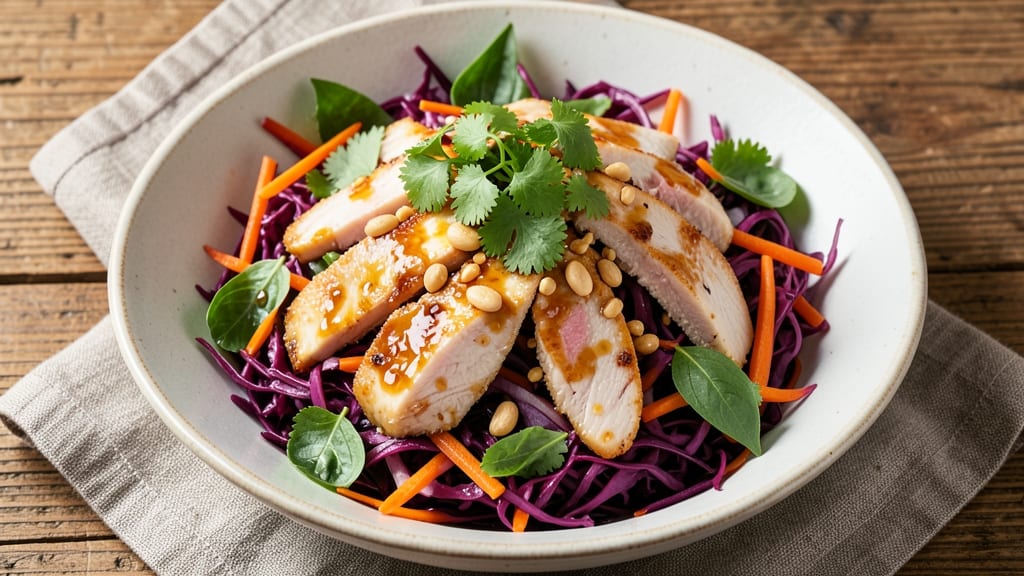
This Asian chopped chicken salad recipe delivers bold flavors and satisfying textures in every bite. The secret lies in tender, poached chicken that stays juicy while absorbing subtle Asian-inspired seasonings.
Fresh herbs like cilantro and Thai basil add brightness, while crunchy elements like toasted peanuts and shredded cabbage create the perfect contrast.
The peanut-lime dressing is where the magic happens—a creamy, tangy blend that ties everything together. I developed this recipe after craving something lighter than takeout but still packed with restaurant-quality flavors.
The best part? It comes together in just 20 minutes, making it perfect for weeknight dinners or meal prep.
What makes this salad special is its balance of textures and flavors: tender chicken, crisp vegetables, creamy dressing, and nutty crunch. The lime zest brightens every bite, while the sesame seeds add a subtle earthy note.
This isn't just another salad—it's a complete, protein-rich meal that's as satisfying as it is fresh.
Serve it over mixed greens for a lighter option or as a standalone bowl with steamed rice on the side. The dressing keeps well for up to a week, so you can make it ahead and enjoy this flavorful salad all week long.
Ingredients for asian chopped chicken salad
Fresh herbs, toasted peanuts, and zesty lime dressing make this salad restaurant-worthy in minutes.
| Ingredient | Amount | Notes |
|---|---|---|
| Boneless Chicken Breast 🍗 | 1 ½ lb | Poached for tenderness |
| Red Cabbage 🥬 | 3 cups | Shredded, thinly sliced |
| Carrots 🥕 | 1 medium | Julienned or matchstick cut |
| Fresh Cilantro 🌿 | ½ cup | Chopped, stems removed |
| Thai Basil 🌿 | ¼ cup | Chopped, fresh preferred |
| Peanuts 🥜 | ½ cup | Toasted, chopped |
| Sesame Seeds 🌰 | 1 tbsp | Toasted for extra flavor |
| Lime 🍋 | 1 whole | Zest and juice required |
| Peanut Butter 🥜 | ½ cup | Natural, no added sugar |
| Soy Sauce 🍶 | 2 tbsp | Low-sodium preferred |
| Honey 🍯 | 2 tbsp | Substitute maple syrup if needed |
| Sesame Oil 🫒 | 1 tbsp | Toasted for aroma |
| Garlic Cloves 🧄 | 2 cloves | Minced for dressing |
| Mixed Greens 🥬 | 4 cups | Butter lettuce or spring mix |
| Salt 🧂 | 1 tsp | Kosher or sea salt |
The chicken is the star, so don't skimp on quality. Boneless, skinless breasts work best—look for plump, firm cuts with no grayish edges. Poaching keeps them juicy, and the Asian-inspired marinade infuses flavor without drying them out. If you're short on time, rotisserie chicken is a great shortcut, just shred it finely. For the cabbage, red or purple adds vibrant color and a subtle sweetness that pairs perfectly with the peanut dressing. Grab a pre-shredded bag from Trader Joe's or Costco to save chopping time.
No Thai basil? Regular basil or mint will work in a pinch, though the flavor will be different. The peanut butter in the dressing needs to be natural, no added sugar—the creamy kind you'd spread on toast. If you're avoiding honey, maple syrup or agave works 1:1. For extra crunch, toast your peanuts in a dry pan over medium heat for 3-4 minutes until golden. The sesame oil should be toasted, not regular—it's worth hunting down at an Asian market for that nutty aroma. The carrots can be pre-shredded or julienned with a peeler for quick prep.
The dressing keeps for up to a week in the fridge, so make extra. Store it in a sealed jar with a thin layer of oil on top to preserve freshness. The salad itself holds up well for 2 days if you keep the dressing separate. I always double the dressing recipe—it's perfect for drizzling on rice bowls or noodles later. For meal prep, store components separately: chicken, veggies, dressing, and toppings. Toss everything together right before serving to keep the crunch intact.
Why You'll Love This Recipe
- No-Fuss Protein Pack: I marinate the chicken in soy, fish sauce, and ginger—then slice and toss it all together. No boiling, no waiting, just chop and go. That crisp-tender texture? Done in 15 minutes flat.
- Umami Bomb Combo: The Thai basil and cilantro hit different—bright, herbal, and just a little funky. Add the shredded red cabbage for that crunchy bite, and suddenly you’ve got a salad that’s anything but basic.
- Lunchbox Legend: Between us, this keeps perfectly for days. Pack it in jars or containers, and it’s my go-to for work lunches or picnics. The cabbage stays crisp, the chicken stays juicy—no sad wilted greens here.
- Budget Win: Chicken breast is cheap, cabbage lasts forever, and carrots? You’ll use them before they go bad. Honestly, I make this twice a month just to use up veggies before they spoil—no waste, all flavor.
Step-by-step instructions for Asian chopped chicken salad
This vibrant salad delivers perfect poached chicken, crisp veggies, and a creamy peanut-lime dressing that ties everything together.
🍳 Step 1: Poach the Chicken for Maximum Tenderness
In a medium pot, combine 4 cups water, 1 tbsp sesame oil, 1 tsp salt, and 2 cloves minced garlic cloves. Bring to a gentle simmer over medium heat—you should see small bubbles but not a rolling boil. Add the 1.5 lb boneless chicken breast and cook for 12-15 minutes, until the internal temperature reaches 165°F and the meat is no longer pink in the center.
Here's the thing—poaching keeps the chicken moist and flaky, unlike grilling or baking which can dry it out. Once done, transfer the chicken to a bowl, cover with plastic wrap, and let it rest for 10 minutes before shredding. This resting period makes the chicken easier to chop and prevents it from turning to mush when tossed with the dressing.
👨🍳 Step 2: Prepare the Crunchy Vegetable Mix
While the chicken rests, shred the 3 cups red cabbage into thin strips using a mandoline or sharp knife. Cut the 1 medium carrots into matchsticks or julienne strips—aim for even ¼-inch thick pieces. Toast the 0.5 cup peanuts in a dry skillet over medium heat for 3-4 minutes, stirring constantly, until they're golden brown and fragrant. This adds incredible texture and depth of flavor.
Don't skip the toasting—it enhances the peanut flavor and prevents a raw, beany taste. While the peanuts toast, chop the 0.5 cup fresh cilantro and 0.25 cup Thai basil separately, removing any tough stems. These fresh herbs will brighten up every bite with their aromatic punch. Keep them in separate piles for now so they stay vibrant in the final salad.
🥘 Step 3: Make the Creamy Peanut-Lime Dressing
In a small bowl, whisk together the 0.5 cup peanut butter, 2 tbsp soy sauce, 2 tbsp honey, 1 tbsp sesame oil, and zest and juice from 1 whole lime. Start with a whisk to combine, then use a fork to break up any lumps. The dressing should be thick but pourable—if it's too thick, add 1-2 tablespoons water to reach your desired consistency.
This is where the magic happens. The peanut butter gives richness, the lime adds brightness, and the sesame oil brings that authentic Asian flavor. Taste as you go—you might want to adjust the balance between sweet (honey), salty (soy sauce), and tangy (lime). I like to add a pinch more salt if needed, but don't overdo it—the soy sauce already provides plenty of umami.
🍽️ Step 4: Assemble the Salad with Perfect Texture
Shred the rested chicken breast using two forks, pulling it into ¼-inch thick strands. In a large bowl, combine the chicken with the shredded red cabbage, carrot matchsticks, toasted peanuts, sesame seeds, and 4 cups mixed greens. Gently toss everything together, being careful not to bruise the greens.
Here's the key: add the dressing gradually. Start with 2 tablespoons and toss well, then add more as needed. You want just enough to coat everything without making it soggy. Sprinkle the chopped cilantro and Thai basil on top right before serving—their freshness shines best when added last.
⏰ Step 5: Serve Immediately for Best Results
This salad is best enjoyed fresh, so serve it immediately after assembly. The poached chicken stays tender, the cabbage maintains its crisp texture, and the peanut-lime dressing holds its creamy consistency. For an extra touch, garnish each serving with an additional sprinkle of sesame seeds and a few peanut halves for visual appeal and crunch.
The perfect bowl should have layers of texture—crunchy peanuts and cabbage, tender chicken, fresh herbs, and creamy dressing—all balanced with bright, tangy flavors. Serve with warm rice or crispy spring rolls for a complete meal that's as satisfying as it is delicious.
Pro Tips For Making Asian Chopped Chicken Salad
- Cook Chicken to 165°F: I used to pull chicken off the heat when it hit 160°F, thinking it would carry over—wrong. This salad needs fully cooked chicken that stays tender when chopped. Use a meat thermometer and rest it 3 minutes after hitting 165°F, or you’ll end up with dry, stringy bits that ruin the texture.
- Shred Cabbage Like Rice: Tiny, even shreds make all the difference. Skip the food processor—it turns cabbage into sad, mushy pulp. Instead, slice it thinly (about 1/8-inch) with a sharp knife, then chop crosswise into rice-sized pieces. This keeps it crisp for longer and makes the salad actually satisfying to eat.
- Don’t Skip the Cold Soak: After cooking, plunge the chicken into an ice bath for 5 minutes. I learned this the hard way—room-temperature chicken in a salad gets soggy fast, especially when mixed with juicy carrots and herbs. Cold chicken stays firm and holds its shape better, so the salad keeps its crunch longer.
- Use Thai Basil at the End: Fresh Thai basil wilts like a sad houseplant when tossed in early. Save it for the final mix—just 10 seconds before serving—and you’ll get bright, fragrant leaves instead of limp, flavorless mush. If you’re really short on time, add a splash of lime juice to the dressing to mimic its punch.
Dietary considerations for asian chopped chicken salad
Gluten-Free Adaptations
This salad is naturally gluten-free, but always double-check labels on ingredients like peanut butter and soy sauce. Use tamari instead of regular soy sauce for a gluten-free alternative—it has the same umami punch without the gluten. I've tested this recipe with Annie's Organic tamari and it works perfectly. 🌱
Nut-Free Substitutions
For nut-free diets, swap peanuts for toasted pumpkin seeds or crushed potato chips (like Kettle Brand Sea Salt chips) for crunch. The dressing can be made with sunflower seed butter instead of peanut butter—just use the same amount.
Toast the seeds in the same way you would peanuts for that nutty flavor without the allergens.
Dairy-Free Considerations
This recipe is already dairy-free, but if you're adding toppings like cheese, opt for nutritional yeast or vegan feta for a cheesy flavor without dairy. The peanut-lime dressing stays creamy and rich without any dairy ingredients.
I've even made this salad for friends with lactose intolerance—they never miss the dairy at all! 🥜
Protein Swaps
Need to avoid chicken? Try tofu or edamame for a plant-based option. For tofu, press and cube 1 block firm tofu, then pan-fry with 1 tbsp soy sauce and 1 tsp sesame oil until golden.
Shred it just like the chicken. Shrimp lovers can use 1 lb cooked shrimp, chilled and chopped—it adds a lovely seafood twist that pairs beautifully with the dressing. 🦐
Lower Sugar Options
Reduce sweetness by cutting the honey to 1 tbsp and adding 1 tsp maple syrup for depth without excess sugar. Alternatively, use monk fruit sweetener mixed with water to mimic honey's consistency.
The dressing stays flavorful while being more diet-friendly. I've also used stevia drops (about 5 drops) for a sugar-free version that still tastes amazing. 🍯
Meal Prep Adjustments
For meal prep, store components separately in airtight containers—chicken, veggies, dressing, and toppings. Assemble only when ready to eat to maintain crispness.
The dressing keeps for up to 7 days, while the veggies stay fresh for 3 days if stored in a sealed container with a paper towel to absorb moisture. This makes it perfect for lunch prep without sacrificing texture. 📅
Nutrition facts
Frequently asked questions
Can I use rotisserie chicken instead of poaching?
Rotisserie chicken is a fantastic shortcut—just shred 1.5 cups of cooked chicken and season it with 1 tsp soy sauce and ½ tsp sesame oil to mimic the poaching flavor. The texture will be slightly different but still delicious. For extra authenticity, add a pinch of five-spice powder to the chicken before tossing with the salad.
How do I make this salad spicier?
Add heat with 1 tsp sriracha or ½ tsp chili flakes to the peanut-lime dressing. For a deeper spice profile, include ½ tsp gochujang (Korean chili paste) when whisking the dressing ingredients. If you prefer a smoky kick, top with crushed red pepper flakes or a sprinkle of Thai bird's eye chili (adjust to taste).
What's the best way to store leftovers?
Store components separately in airtight containers: chicken, veggies, dressing, and toppings. Keep the dressing in a sealed jar with a thin layer of oil on top to preserve freshness. The salad itself stays crisp for 2 days in the fridge—assemble right before serving to maintain texture. The dressing lasts up to 7 days and works great on rice bowls or noodles later!
Can I make this salad ahead of time?
Yes! Prep all ingredients except the fresh herbs and dressing up to 1 day ahead. Store the poached chicken, chopped veggies, and toasted peanuts in separate containers. When ready to serve, toss everything together and add the dressing and herbs last. For meal prep, double the dressing recipe—it keeps well and adds flavor to other meals all week.
What if I don't have Thai basil?
No problem! Substitute with regular basil, mint, or coriander. For a closer flavor, mix ½ cup cilantro with ¼ cup mint. The salad will still taste fresh and vibrant—just the flavor profile will be slightly different. If you're avoiding cilantro, use flat-leaf parsley instead for a milder herb note.