
Main Courses
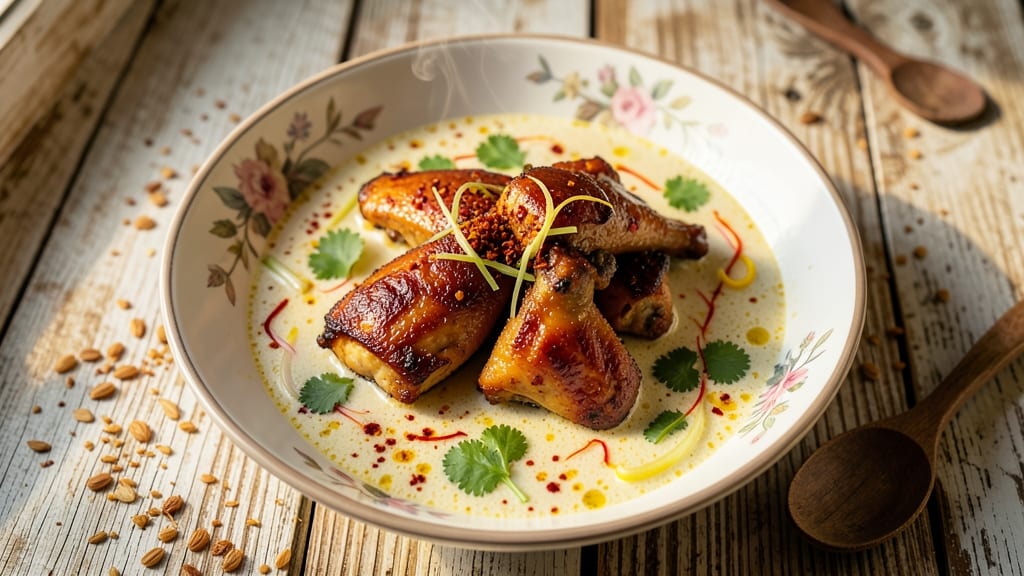
This authentic Malaysian chicken curry recipe transports you straight to the bustling streets of Kuala Lumpur with its fragrant coconut and turmeric magic. 🌟 The secret lies in traditional spices like lemongrass, galangal, and sambal—each playing a crucial role in creating that signature depth and warmth.
I developed this recipe after years of perfecting the balance between spice and richness, ensuring every bite delivers the complex flavors of Malaysia.
The process begins with marinating the chicken in a blend of turmeric, coriander, and cumin, which infuses the meat with vibrant color and earthy notes. Then, the sauce comes together with coconut milk, fresh herbs, and a touch of chili for heat.
The key to authenticity is slow simmering, allowing the flavors to meld into a harmonious, aromatic broth that coats each tender piece of chicken.
By the time you serve this dish, your kitchen will be filled with the intoxicating scent of simmering spices and coconut. The result is a curry that’s rich yet balanced, with perfectly tender chicken swimming in a velvety sauce that’s both comforting and exciting.
Serve it with steamed jasmine rice or warm roti canai for the full Malaysian experience.
This recipe is designed to be approachable yet deeply flavorful, making it perfect for both weeknight dinners and special occasions. The step-by-step instructions ensure you achieve that authentic taste without any shortcuts. Let’s get cooking!
Ingredients for authentic malaysian chicken curry
These vibrant ingredients bring Malaysian street food magic to your kitchen—fresh, fragrant, and full of depth.
| Ingredient | Amount | Notes |
|---|---|---|
| Boneless Chicken Thighs 🍗 | 1 ½ lb | Skin-on for flavor, cut into bite-sized pieces |
| Fresh Galangal 🌿 | 2 inches | Peeled, sliced thin (about 0.5 inch pieces) |
| Fresh Turmeric 🧅 | 1 inch | Peeled, sliced thin (about 0.25 inch pieces) |
| Lemongrass Stalks 🌱 | 3 whole | Outer leaves trimmed, bottom 4 inches used |
| Sambal Oelek 🌶️ | 1 tbsp | Adjust for heat preference |
| Coconut Milk 🥥 | 1 can | Full-fat, 13.5 oz can |
| Yellow Curry Paste 🌶️ | 2 tbsp | Authentic Malaysian brand preferred |
| Fish Sauce 🍶 | 1 tbsp | Red Boat preferred |
| Palm Sugar 🍯 | 1 tbsp | Or substitute brown sugar |
| Kaffir Lime Leaves 🍋 | 4 whole | Or 1 tbsp dried lime zest |
| Fresh Cilantro 🌿 | ¼ cup | Chopped, for garnish |
| Fresh Thai Basil 🌿 | ¼ cup | Or regular basil in a pinch |
| Vegetable Oil 🫒 | 2 tbsp | For frying chicken |
| Salt 🧂 | 1 tsp | Kosher or sea salt |
| Ground White Pepper 🌶️ | ½ tsp | Freshly ground preferred |
Galangal and turmeric are the soul of this curry—fresh is non-negotiable. Hit the Asian market for the best quality; the bright, pale yellow galangal should be firm with no dark spots. If you can't find fresh turmeric, ground turmeric at half the amount works, but it lacks that earthy complexity. Lemongrass? Grab the thick stalks—Trader Joe's sells them pre-trimmed, which is a lifesaver. The curry paste is where authenticity shines—Maesri or Thai Kitchen brands are my go-tos, but any yellow curry paste will do. For fish sauce, Red Boat is the gold standard, but Three Crabs works too.
No galangal? Ginger at double the amount is the closest substitute, though it won't be identical. Running out of kaffir lime leaves? Dried lime zest plus a splash of lime juice mimics the citrusy aroma. The coconut milk can be light, but full-fat gives that luxurious texture. Sambal Oelek is your heat control—start with less, taste as you go. Fresh Thai basil is ideal, but regular basil with a pinch of lime zest gets you close. Palm sugar is worth hunting down for that authentic caramel note, but brown sugar works in a bind. Pro tip: Toast your curry paste in oil for 30 seconds before adding liquids—this deepens the flavor.
This curry tastes even better the next day as flavors meld. Store in an airtight container in the fridge for up to 4 days, or freeze for 3 months. The sauce thickens when chilled—just stir in a splash of coconut milk to loosen before reheating. I always make extra because it disappears fast. Serve with steamed jasmine rice or warm roti canai for the full Malaysian experience. The leftovers reheat beautifully—microwave with a splash of water to restore that velvety texture.
Why You'll Love This Recipe
- No-Fuss Fresh Ingredients: I swear by this recipe because it only needs a handful of things—and most are already in my fridge. Galangal and turmeric add that signature warmth without fuss, while lemongrass and sambal oelek give it that bright, spicy kick. (Yes, even if I forget to buy fresh galangal, frozen works in a pinch.)
- Deep, Complex Heat: The sambal oelek and lemongrass create this perfect balance—spicy but not overpowering, with a citrusy tang that lingers. It’s not just "curry flavor"; it’s that rich, aromatic depth where the chicken soaks up all the goodness like a sponge.
- Weeknight & Meal Prep Hero: Between us, this is my go-to for busy nights. The curry reheats beautifully, and I can make a big batch on Sunday, portion it out, and freeze half for when I’m too tired to cook. (My roommate’s favorite—he’ll eat it cold from the fridge, no lie.)
- Budget-Friendly Feast: Chicken thighs are cheap, and the spices stretch across multiple meals. I’ve fed six people for under $20 with this recipe, and honestly? No one complains about the leftovers. The sambal oelek keeps it exciting, so it never tastes repetitive.
Step-by-step instructions for authentic Malaysian chicken curry
Let's build this fragrant curry step by step—where every aromatic ingredient plays its part.
🍳 Step 1: Sear the Chicken Until Golden
Heat the 2 tablespoons vegetable oil in a heavy-bottomed pot over medium-high heat until shimmering. Add the 1.5 lb boneless chicken thighs cut into bite-sized pieces, working in batches if needed to avoid crowding. Let them sear undisturbed for 3-4 minutes until golden brown on all sides—this builds deep flavor through the Maillard reaction.
I press down gently on the chicken pieces during the first minute to prevent curling, which ensures even contact with the hot oil. Once golden, transfer the chicken to a plate and set aside. Don't drain the oil—those flavorful browned bits will form the base of our curry sauce.
👨🍳 Step 2: Build the Aromatic Base
In the same pot, add the 2 inches fresh galangal and 1 inch fresh turmeric, both sliced thin, along with the bottom 4 inches of 3 lemongrass stalks (trimmed and bruised with the side of your knife). Cook for 2-3 minutes until the galangal and turmeric soften slightly and release their earthy aromas—you'll smell that signature Malaysian warmth.
Add the 2 tablespoons yellow curry paste and stir constantly for 1 minute until fragrant. This is where the magic happens—don't rush this step. The paste contains toasted spices that need time to bloom properly. I like to add a splash of water here if it starts sticking, just enough to keep it moving.
🍳 Step 3: Simmer the Curry Sauce
Pour in the 1 can coconut milk and stir well to combine. Add the 1 tablespoon fish sauce, 1 tablespoon palm sugar, 1 teaspoon salt, and 0.5 teaspoon ground white pepper. Bring to a gentle simmer over medium heat, then add the 1 tablespoon sambal oelek and 4 whole kaffir lime leaves. Let it simmer uncovered for 15-20 minutes, stirring occasionally, until the sauce thickens slightly and the chicken is tender.
Here's the thing—this simmering time allows all the flavors to meld together. You'll see the sauce reduce slightly and develop a beautiful golden hue. The kaffir lime leaves will infuse their citrusy aroma, while the sambal adds just the right amount of heat. Taste and adjust seasoning—you might want to add a bit more fish sauce for umami or palm sugar to balance.
🥘 Step 4: Finish and Garnish
Return the seared chicken to the pot and gently stir to coat everything in the fragrant sauce. Let it cook for another 5 minutes to ensure the chicken absorbs all those delicious flavors. Remove from heat and discard the kaffir lime leaves—they've done their job.
Ladle the curry into serving bowls and garnish with the 0.25 cup fresh cilantro and 0.25 cup fresh Thai basil. The herbs add freshness that cuts through the richness of the coconut milk. Serve immediately with steamed jasmine rice—this is where the curry truly shines, soaking up every last drop of that aromatic sauce.
Pro Tips For Making Authentic Malaysian Chicken Curry
- CHAR THE GALANGAL FIRST: I learned this the hard way—tossing raw galangal into the pot and expecting it to soften properly is a gamble. Instead, slice it thin (about ¼-inch) and fry in oil for 2-3 minutes until fragrant and slightly caramelized. This unlocks its flavor and prevents that bitter aftertaste that ruins everything.
- USE DRY CHICKEN: Pat those chicken thighs thoroughly with paper towels before searing. Wet skin steams instead of browns, and you’ll end up with a pale, watery curry. A quick 5-minute air-dry in the fridge (yes, even if you’re impatient like me) guarantees a crispy, golden crust that clings to the meat.
- LOW AND SLOW AFTER SEARING: After the initial sambal oelek and spice toast, resist the urge to crank the heat back up. Simmer the curry at a gentle bubble—just enough to see tiny ripples—so the lemongrass and turmeric infuse without turning the oil greasy. Rushed simmers make for a flat, one-dimensional broth.
- TOAST THE WHOLE LEMONGRASS: Split the stalks lengthwise and char the pale inner sides directly over a gas flame (or under a broiler for 2 minutes) before adding to the pot. The smoky depth cuts through the heat of sambal oelek and balances the dish—something store-bought paste can’t replicate. Sounds weird, but it works.
Creative variations of this dish
Spicy Rendang-Inspired Twist
Transform your curry into a Malaysian rendang-inspired dish by adding 1 cup shredded coconut and 1 tbsp tamarind paste during the simmering phase. After the initial 15-minute simmer, remove the chicken and reduce the sauce until it's thick and glossy—this takes about 20-25 minutes.
Return the chicken, cover, and cook on low heat for 1 hour, stirring occasionally. The result? A dry, intensely flavorful curry with tender, caramelized chicken that's perfect for meal prep. 🌶️
Vegetarian Adaptation
Swap the chicken for 1.5 lb firm tofu (pressed and cubed) or 1.5 lb mushrooms (like oyster or king oyster). Sauté the tofu or mushrooms in 1 tbsp oil until golden before adding the aromatic base.
For extra protein, add ½ cup chickpeas during the final 5 minutes of cooking. The sauce will still be rich and satisfying—just as fragrant as the original. 🌱
Seafood Fusion
For a coastal-inspired twist, replace the chicken with 1.5 lb white fish fillets (like cod or mahi-mahi) or 1.5 lb shrimp. Add the seafood only in the last 5 minutes of cooking to prevent overcooking.
Boost the sauce with 1 tsp shrimp paste (optional but adds depth) and garnish with lime wedges for brightness. This version is lighter yet packed with umami. 🦐
Slow-Cooker Magic
Make this curry hands-off by using a slow cooker. After searing the chicken and building the aromatic base, transfer everything to the slow cooker, add the coconut milk, and cook on low for 6-7 hours or high for 3-4 hours.
The slow cooking deepens the flavors naturally, making it ideal for busy days. Just stir occasionally and adjust seasoning at the end. 🍲
Instant Pot Hack
For a 30-minute version, sear the chicken as directed, then add all ingredients to your Instant Pot. Cook on high pressure for 12 minutes, followed by a 10-minute natural release.
Finish with fresh herbs and serve. The pressure cooker intensifies the flavors while keeping the chicken tender. Perfect for weeknights! ⏰
Spice-Level Control
Adjust heat to your preference: mild (reduce sambal to ½ tbsp), medium (use 1 tbsp), or fiery (add 1 tbsp chili flakes at the end). For a smoky depth, stir in ½ tsp smoked paprika during the simmer.
Balance heat with a splash of coconut milk or a spoonful of palm sugar** if needed. 🔥
Nutrition facts
Frequently asked questions
Why does authentic Malaysian chicken curry use galangal instead of ginger?
Galangal has a distinct citrusy, peppery flavor that's essential for authentic Malaysian curries. While ginger can substitute in a pinch, it lacks the complex aroma that galangal brings—think of it as the difference between a flat soda and a sparkling one. The bright, piney notes of galangal balance the coconut milk's richness perfectly.
Can I make this curry without kaffir lime leaves?
Yes, but you'll notice the difference! Combine 1 tablespoon dried lime zest with 1 teaspoon lime juice for a similar citrusy aroma. For extra depth, add ½ teaspoon ground coriander—it complements the missing floral notes. The curry will still taste delicious, just slightly less aromatic.
How do I know when the chicken is fully cooked?
The chicken should reach an internal temperature of 165°F and be tender when pierced with a fork. For skin-on thighs, the skin will crisp up beautifully during the final 5 minutes of simmering. If using boneless breasts, cook them separately until just done (12-14 minutes) before adding to the curry.
What's the secret to getting that perfect velvety sauce texture?
Simmering uncovered for 15-20 minutes allows the coconut milk to reduce slightly while developing depth. For extra silkiness, whisk in 1 tablespoon cornstarch mixed with 2 tablespoons water during the last 5 minutes of cooking. Never boil vigorously—keep it at a gentle simmer to prevent curdling.
Can I make this curry ahead of time?
The flavors actually improve overnight. Store in an airtight container in the fridge for up to 4 days or freeze for 3 months. Reheat gently on low heat, adding a splash of coconut milk if the sauce thickens too much. The chicken will stay moist and the spices more aromatic.