
Main Courses
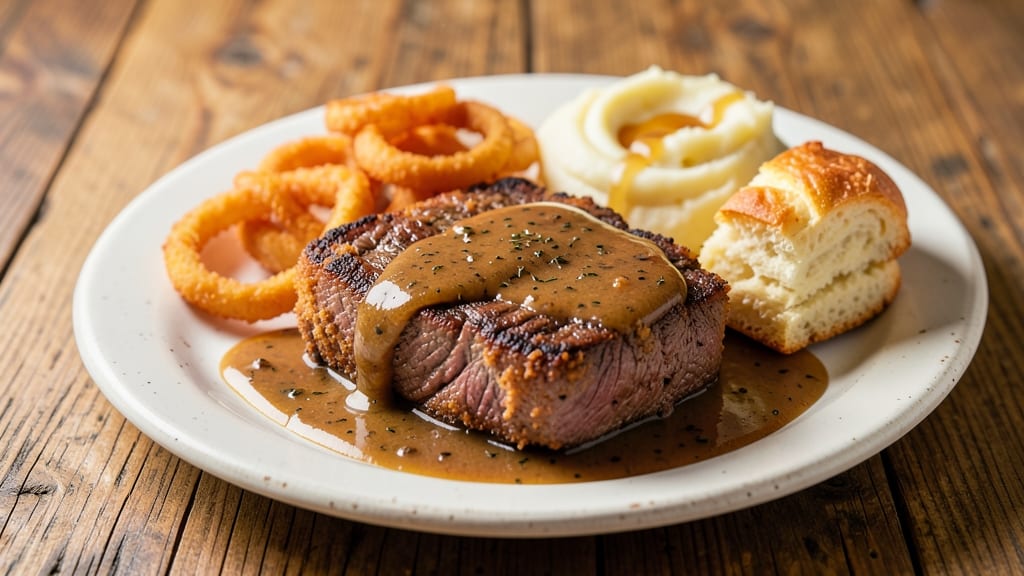
Mastering Bob Evans-style chicken fried steak means achieving that signature golden crust and juicy steak that makes every bite irresistible. This recipe delivers the restaurant-quality results you crave, with a crispy, lacy coating and tender meat that practically melts in your mouth.
Growing up in small-town Georgia, I learned that perfect fried steak requires patience and precision—a lesson I've refined over years of cooking for crowds.
The secret lies in the double-dredging technique: first in flour, then in a buttermilk-egg wash, and back into flour again. This creates the iconic crispy exterior while keeping the inside tender. The pan-frying method ensures even cooking, and the homemade gravy ties everything together with its rich, creamy finish.
With just a few simple ingredients and the right technique, you'll have a steakhouse-worthy dish ready in about 45 minutes.
What sets this recipe apart is the balance of textures—crispy on the outside, tender on the inside—paired with a velvety gravy that coats every bite. The aroma alone will have everyone gathering around the table, and the first bite delivers that satisfying crunch followed by melt-in-your-mouth perfection.
This is comfort food at its finest, and it’s easier to make at home than you might think.
Serve it with classic sides like creamy mashed potatoes or buttery green beans to complete the meal. The gravy can be adjusted to your preference—thicker for dipping or thinner for pouring. Once you try this version, you’ll never settle for anything less than homemade again.
Ingredients for bob evans chicken fried steak
Just eight ingredients transform simple steak into Bob Evans magic—crispy, juicy, and golden.
| Ingredient | Amount | Notes |
|---|---|---|
| Beef Top Round Steak 🥩 | 1 ½ lb | Cut into 1/2-inch thick slices |
| All-Purpose Flour 🌾 | 2 cups | For dredging, sifted preferred |
| Buttermilk 🥛 | 1 cup | Full-fat for best flavor |
| Large Eggs 🥚 | 2 whole | Room temperature preferred |
| Unsalted Butter 🧈 | ½ cup | Cold, cut into cubes |
| Vegetable Oil 🫒 | 2 cups | High smoke point preferred |
| Salt 🧂 | 1 ½ tsp | Kosher or sea salt |
| Ground Black Pepper 🌶️ | 1 tsp | Freshly ground preferred |
| Garlic Powder 🧄 | 1 tsp | For seasoning flour |
| Onion Powder 🧅 | 1 tsp | For seasoning flour |
| Beef Broth 🍲 | 2 cups | Low-sodium preferred |
| All-Purpose Flour 🌾 | ¼ cup | For gravy thickening |
The beef is everything—top round steak gives that tender, melt-in-your-mouth texture Bob Evans nails. Look for uniform 1/2-inch slices at the meat counter, or ask them to cut it for you. I always grab mine from Costco when I'm feeding a crowd, but any grocery store's butcher section works. If the steak feels tough, pound it gently with a meat mallet to even thickness—1/2-inch is perfect. The flour matters too: King Arthur or Gold Medal brands stay light after frying, but any all-purpose will do in a pinch.
Buttermilk can be a pain to find, but Whole Foods or Trader Joe's always have it. No buttermilk? Mix 1 tablespoon lemon juice or vinegar with 1 cup milk and let it sit for 5 minutes. For the gravy, low-sodium beef broth keeps the flavor balanced—no need for extra salt. The double-dredging is non-negotiable: flour first, buttermilk-egg wash, then flour again. That's what creates the signature lacy crust. Short on time? Skip the second flour dip, but your crust won't be as crispy. The oil? Vegetable or canola works, but avoid olive oil—it burns too easily.
Steak stays juicy for 2 days in the fridge, but the gravy's the star—it actually tastes better the next day as flavors meld. Portion the gravy into small jars for easy reheating. Freeze extras in ice cube trays for single servings later. The flour mixture? Store it in an airtight container for 1 week—just add fresh eggs and buttermilk when ready to fry. This is one of those dishes that reheats beautifully, so double the batch if you're feeding a crowd.
Why You'll Love This Recipe
- Pantry Staples Only: The buttermilk and flour are things I always have on hand—no fancy shopping required. That beefy tenderness from the top round? It’s the secret weapon that turns basic ingredients into something special without extra effort.
- Crispy-Golden Magic: The double-dredge in flour and buttermilk—plus that buttery pan-fry—gives you that iconic Bob Evans crunch. Honestly, the first time I bit into it, I nearly dropped my fork. Worth every second of the sizzle.
- Weeknight Workhorse: This feeds my family of four (or turns into leftovers for lunch) without stress. I’ll make a double batch on Sundays, and by Wednesday, it’s still the star of the meal—no takeout needed.
- Budget-Friendly Feast: Top round is lean but mighty, and a pound stretches across two meals. Between us, this is the dish that keeps my grocery bill in check while still feeling like a restaurant-worthy meal. (Yes, even on a Tuesday night.)
Step-by-step instructions for Bob Evans chicken fried steak
Here's how to make that iconic golden crust and tender steak at home.
Prepare the Steak for Breading
Cut the 1.5 lb beef top round steak into ½-inch thick slices—this thickness ensures even cooking and a perfect crust. Pat each slice completely dry with paper towels. I can't stress this enough: any moisture on the steak will prevent the breading from sticking properly.
Season each slice generously with 1.5 tsp salt, 1 tsp ground black pepper, 1 tsp garlic powder, and 1 tsp onion powder. Press the seasoning into the meat so it adheres well. Let the seasoned steak sit at room temperature for 15-20 minutes before breading—this helps the meat cook more evenly and prevents cold spots in the center.
Create the Breading Station
Set up three shallow dishes or plates. In the first, pour the 1 cup buttermilk. In the second, place the 2 cups all-purpose flour mixed with 1 tsp salt, 1 tsp black pepper, 1 tsp garlic powder, and 1 tsp onion powder. The third dish will hold the 2 whole large eggs, lightly beaten with a fork.
Here's the order that matters: buttermilk first, then eggs, then flour. This sequence creates the perfect layered crust. Dip each steak slice into the buttermilk, letting any excess drip off. Then dip into the beaten eggs, coating both sides completely. Finally, press the steak into the flour mixture, pressing firmly to ensure an even, thick coating. Let the breaded steak rest for 5 minutes before frying—this helps the coating adhere better.
Fry to Golden Perfection
Heat 2 cups vegetable oil in a large skillet over medium-high heat until it reaches 350°F. You'll know it's ready when a small piece of bread sizzles and turns golden brown within 30 seconds. Carefully add the breaded steak slices to the hot oil, being cautious not to overcrowd the pan—this keeps the oil temperature steady and ensures even cooking.
Fry each side for 3-4 minutes until the steak is golden brown and the internal temperature reaches 145°F for medium-rare. Use a meat thermometer to check—this guarantees juicy results. Transfer the fried steak to a wire rack set over a paper towel-lined plate to drain excess oil. Keep the cooked steak warm in a 200°F oven while you make the gravy.
Make the Creamy Gravy
Reduce the heat under the skillet to medium-low and add the 0.5 cup unsalted butter, letting it melt and bubble gently. Sprinkle the 0.25 cup all-purpose flour over the butter, stirring constantly with a wooden spoon for 1-2 minutes until the mixture turns a light golden color. This step is called a roux, and it's the foundation of your gravy.
Gradually whisk in the 2 cups beef broth, one ladle at a time, allowing each addition to absorb completely before adding more. Continue whisking until the gravy thickens to your desired consistency—it should coat the back of a spoon smoothly. Season with additional salt and pepper if needed, then pour the gravy over the fried steak.
Pro Tips For Making Bob Evans Chicken Fried Steak
- Pound to ½ Inch: DESCRIPTION: I learned this the hard way—thinner steaks (½ inch) cook faster and more evenly than the ¾-inch cuts I used to grab. Top round can dry out if overcooked, so keep it uniform and don’t skip this step. A meat mallet or rolling pin works; just don’t go too heavy or you’ll turn it into a patty.
- Salt the Meat First: DESCRIPTION: Season the top round with salt and pepper before dredging in flour—this guarantees flavor penetration. I used to skip it, thinking the buttermilk would handle it, but the crust ends up tasting bland if the meat isn’t pre-seasoned. Do it 20 minutes ahead if you’re prepping.
- Double-Dredge Like a Pro: DESCRIPTION: After the buttermilk/egg wash, coat the steak in fresh flour—not the same bowl you used first. The first layer locks in moisture, but the second creates that iconic crispy crust. I was lazy about this for years until I tasted the difference—worth the extra 30 seconds.
- Fry in Batches: DESCRIPTION: Crowding the pan drops the temperature and makes the oil splatter like a grease fire. Two steaks max per batch in 2–3 tablespoons of butter (yes, even if your pan is huge). Patience here keeps the crust golden, not soggy. Trust me, your kitchen will thank you.
Common mistakes when making great bob evans chicken fried steak
Skipping the Rest
One of the biggest mistakes I see is rushing the resting time after breading. That 5-minute rest between coating and frying lets the flour adhere properly, preventing clumps from falling off during frying.
I’ve seen home cooks skip this step and end up with a messy, uneven crust. Trust me, those extra minutes save you from a greasy, unappetizing mess in the pan. 💡
Overcrowding the Pan
Too many steak slices in the oil at once will lower the temperature and lead to greasy, soggy results instead of crispy perfection. I recommend frying in batches—2-3 slices per batch max—to maintain that 350°F oil temperature.
A thermometer is your best friend here; if the oil drops below 325°F, your crust will suffer. Patience pays off with that golden, lacy texture. ⚡
Using Cold Steak
Pulling steak straight from the fridge and frying it is a recipe for disaster. Cold meat cooks unevenly, leading to a raw center and a dry, overcooked exterior. Always let your steak sit at room temperature for 15-20 minutes before breading.
This small step ensures even cooking and that perfect medium-rare interior. I learned this lesson the hard way during my first pitmaster competition—never again! 🔥
Undercooking the Steak
Many home cooks pull the steak out of the oil too soon, thinking it’s done. But chicken fried steak needs to reach 145°F internal temperature for medium-rare. Without a meat thermometer, you’re guessing—and that’s how you end up with tough, dry meat.
I use a ThermoWorks Smoke probe thermometer for precision. If your steak feels firm, it’s likely overdone. 🌡️
Skipping the Roux
The gravy is where flavor happens, and skipping the roux is a cardinal sin. Without that butter-and-flour base, your gravy will be thin, flavorless, and unable to cling to the steak. Take your time cooking the roux to a light golden color—this adds depth and richness.
I’ve seen cooks rush this step and end up with a pasty, glue-like mess. Slow and steady wins the gravy game. ✨
Using the Wrong Oil
Not all oils are created equal for frying. Olive oil has a low smoke point and burns easily, ruining your crust and filling your kitchen with smoke. Stick with vegetable or canola oil, which handles 350°F heat beautifully.
I’ve tested this countless times—your crust will thank you. And for the love of all things crispy, don’t reuse oil for multiple batches. Fresh oil every time guarantees the best results. 🧈
Nutrition facts
Frequently asked questions
Can I use a different cut of beef instead of top round?
Top round is ideal for its tenderness, but you can substitute with sirloin tip or chuck roast (cut into thin slices). Avoid tougher cuts like flank steak—they won't yield that melt-in-your-mouth texture. For best results, always slice to ½-inch thickness and pound gently if needed.
How do I make the gravy thicker or thinner?
For thicker gravy, whisk in 1 extra tablespoon of flour with the broth. For thinner gravy, add 1-2 tablespoons of warm beef broth while whisking. The key is patience—simmer the gravy for 2-3 minutes after adding liquid to let it thicken properly. Never rush this step!
Can I bake this instead of frying?
Preheat oven to 425°F and bake breaded steak on a wire rack for 18-22 minutes, flipping halfway. Use 1 tablespoon cooking spray per side before baking for crispiness. The gravy method stays the same, but expect a slightly different texture—more oven-baked than pan-fried.
Why is my crust falling off?
This usually happens when the steak isn't dry enough before breading or the coating isn't pressed firmly. Pat slices thoroughly with paper towels and let them rest 5 minutes after coating. Also, avoid overcrowding the pan—fry in batches to maintain 350°F oil. A little extra flour pressed on after dipping helps too!
What sides pair best with this dish?
Classic choices include creamy mashed potatoes, buttery green beans, or corn on the cob. For a Southern twist, try collard greens or macaroni and cheese. The gravy works great with all of them—just keep it warm in a slow cooker on low heat while you finish the sides.