
Soups & Stews
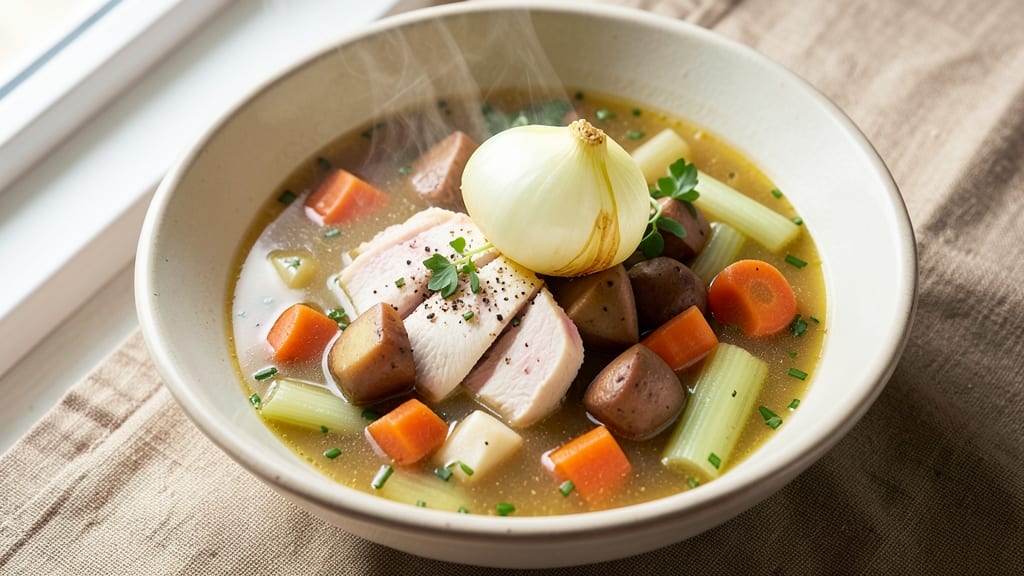
Creating a Campbell's chicken broth soup that delivers restaurant-quality depth without the fuss is all about balancing simplicity with professional techniques. I developed this recipe during a particularly busy week when I needed a comforting, no-fuss meal that still felt special—using Campbell's broth as the flavor foundation.
The secret lies in building layers of savory richness through aromatics and proper cooking times, ensuring every spoonful tastes like it was simmered all day.
What makes this recipe work is the combination of homestyle simplicity and professional execution. You'll start with a base of Campbell's chicken broth, then elevate it with sautéed onions, carrots, and celery—classic mirepoix that forms the aromatic foundation.
Adding diced potatoes and chicken creates hearty texture, while a touch of cream or butter at the end adds velvety depth. The result is a soup that's foolproof yet impressive, perfect for weeknight dinners or meal prep.
The outcome is a creamy, comforting soup with tender chicken, perfectly cooked vegetables, and a broth that's rich without being heavy. The flavors meld beautifully, creating a balance of savory, slightly sweet, and umami notes that make this soup irresistibly satisfying.
This is the kind of meal that warms you up from the inside out, with minimal effort but maximum flavor.
This recipe scales beautifully—double it for a crowd or halve it for leftovers. Garnish with fresh parsley or a sprinkle of black pepper for a finishing touch. Let's get cooking!
Ingredients for campbell's chicken broth soup
Pantry staples plus a few fresh veggies—this soup delivers restaurant-quality flavor with zero fuss.
| Ingredient | Amount | Notes |
|---|---|---|
| Campbell's Chicken Broth 🍲 | 6 cups | Low-sodium preferred for control |
| Yellow Onion 🧅 | 1 whole | Diced, medium size preferred |
| Carrots 🥕 | 3 medium | Diced small, uniform pieces |
| Celery Stalks 🧄 | 3 medium | Diced small, including leaves |
| Russet Potatoes 🥔 | 2 medium | Diced small, peeled preferred |
| Boneless Chicken Breast 🍗 | 1 ½ lb | Cut into bite-sized pieces |
| Heavy Cream 🥛 | ¼ cup | Full-fat for richness |
| Unsalted Butter 🧈 | 2 tbsp | For finishing touch |
| Fresh Parsley 🌿 | 0.1 cup | Chopped, for garnish |
| Garlic Cloves 🧄 | 3 cloves | Minced, for depth |
| Diamond Crystal Kosher Salt 🧂 | 1 tsp | Adjust to taste |
| Freshly Ground Black Pepper 🌶️ | ½ tsp | For finishing touch |
The Campbell's broth is your flavor foundation—stick with low-sodium for better control over seasoning. For the mirepoix, Trader Joe's or Whole Foods have pre-diced veggies that save time, but fresh is better if you've got it. The potatoes should be peeled and diced uniformly—that's what makes them cook perfectly. Chicken breast stays tender when cut into even pieces (about 1-inch cubes). The garlic? Freshly minced makes all the difference—pre-minced from jars just doesn't cut it.
No fresh parsley? Dried works at half the amount, but fresh is ideal for that bright finish. Short on butter? Olive oil works in a pinch, though it won't add the same richness. Want to make this dairy-free? Swap the heavy cream for coconut milk—it adds creaminess without lactose. The broth can be subbed with homemade chicken broth if you prefer, but Campbell's gives that consistent, reliable base. For extra depth, add a bay leaf while simmering—just remember to remove it before serving.
This soup reheats beautifully—just add a splash of broth if it gets too thick. Keeps in the fridge for 4-5 days or freezes for 3 months. I always make a double batch and portion it into containers for quick lunches. The flavors actually improve overnight as everything melds together. Store the broth separate if you're prepping ahead—just heat it up and stir it in when you're ready to serve.
Why You'll Love This Recipe
- One-Pot Magic: I swear by this—just toss the onion, carrots, celery, and diced potatoes into a pot with Campbell’s broth, bring it to a boil, then let it simmer. No fancy techniques, no extra pots, no stress. The broth does all the heavy lifting while I chop veggies in five minutes flat.
- Savory Simplicity: That first sip of broth with tender potatoes and caramelized onions? Pure satisfaction. The broth’s rich base lets the veggies shine without needing fancy seasonings—just salt, pepper, and a splash of lemon if I’m feeling fancy. It’s the kind of flavor that makes you pause mid-bite.
- Meal Prep MVP: I make a double batch every Sunday because this soup begs to be reheated. The potatoes stay creamy, the broth stays flavorful, and it’s the ultimate lunchbox filler for busy weeks. Honestly, my kids fight over who gets the leftovers—no exaggeration.
- Budget-Friendly Staple: A can of Campbell’s broth, a few cheap veggies, and potatoes? This feeds four for under $5. It’s my go-to when groceries are tight but I refuse to skimp on taste. Plus, the leftovers stretch into salads or sandwiches—zero waste, all flavor.
Step-by-step instructions for Campbell's chicken broth soup
Here's how to build a soup that's rich, hearty, and packed with homestyle comfort.
Sauté the Vegetable Base
Heat 2 tablespoons unsalted butter in a large pot over medium heat until it foams. Add the diced yellow onion, 3 medium carrots, and 3 medium celery stalks, stirring occasionally for 5-6 minutes until the vegetables soften and the onion becomes translucent.
Here's the thing—don't rush this step. You want those vegetables to release their natural sweetness and develop a slight caramelization at the edges. Add the 3 minced garlic cloves and cook for an additional 30 seconds until fragrant. This aromatic foundation will carry through the entire soup.
Add Potatoes and Chicken
Toss in the diced 2 medium russet potatoes and the 1.5 lb boneless chicken breast cut into bite-sized pieces. Pour in the 6 cups Campbell's chicken broth, stirring gently to combine. Bring the mixture to a gentle boil, then reduce heat to medium-low to maintain a steady simmer.
Real talk: The broth should just barely bubble at the edges—this prevents the chicken from becoming rubbery. Cover the pot and let it simmer for 15 minutes, allowing the potatoes to begin softening while the chicken starts to cook through.
Finish the Chicken and Season
After 15 minutes, use tongs to remove the chicken pieces and transfer them to a plate. They should be just about done—let them rest for 5 minutes while you finish the soup. Skim off any foam that rises to the surface, then stir in the 1 teaspoon diamond crystal kosher salt and 0.5 teaspoon freshly ground black pepper.
Return the chicken to the pot and simmer uncovered for another 5-7 minutes until the chicken is fully cooked through and the potatoes are tender enough to pierce easily with a fork. The soup should now have a velvety consistency with all ingredients perfectly integrated.
Add Cream and Garnish
Reduce the heat to low and stir in the 0.25 cup heavy cream, letting it warm through for 2-3 minutes. The cream will create a luxurious finish without overpowering the broth's savory depth. Taste and adjust seasoning if needed—this is where you can really refine the flavor.
Ladle the soup into bowls and garnish each serving with 0.1 cup chopped fresh parsley. The parsley adds a fresh contrast to the rich broth and cream, plus it looks beautiful on the plate. Serve immediately while hot, with crusty bread to soak up every last drop of that comforting broth.
Pro Tips For Making Campbell'S Chicken Broth Soup
- Sweat the Veggies First: I learned this the hard way—skipping the initial sweat with onion, celery, and carrots leaves your soup tasting flat. Sauté them in a pot with a splash of broth or water for 5-7 minutes until the onion turns translucent and the celery softens. This builds flavor before the broth even joins the party.
- Cut Potatoes Evenly: Uneven potatoes mean some mushy, some rock-hard. Quarter them into 1-inch chunks—no smaller, no larger—and toss them in cold water to stop browning while you prep. This ensures they all cook at the same pace without falling apart in the broth.
- Don’t Boil the Broth: After adding Campbell’s broth, bring it to a gentle simmer—tiny bubbles at the edges, not a rolling boil. Boiling can turn the broth cloudy and dull the flavors you just built. Keep it at a low simmer for 15-20 minutes, stirring occasionally, so the potatoes absorb the broth without falling apart.
- Add Salt Last: Campbell’s broth is already salted, but the veggies and potatoes will soak up some of that flavor. Taste the soup before adding extra salt—you might not need it. If you do, add it at the end and let it sit for 5 minutes so the flavors meld. Over-salting early is a rookie mistake.
Troubleshooting this dish
Broth Too Thin?
If your soup ends up watery, it’s likely because the broth wasn’t reduced enough or the potatoes absorbed too much liquid. My trick? Simmer uncovered for an extra 5-10 minutes to let excess moisture evaporate.
For a quicker fix, stir in 1-2 tablespoons of cornstarch mixed with 2 tablespoons cold water and simmer until thickened. Just don’t overdo it—you want velvety, not gluey. 💫
Chicken Tastes Dry
Overcooking chicken is the #1 mistake here. The moment your broth comes to a gentle simmer, set a timer for 12-15 minutes max—any longer and the meat turns rubbery. I pull chicken at 165°F internal temp and let it rest for 5 minutes before returning it to the pot.
Pro tip: Use boneless, skinless breasts—they stay juicier than thighs.
Vegetables Undercooked
Potatoes and carrots need patience. If they’re still firm after simmering, cover the pot and cook another 5-7 minutes. For even cooking, cut potatoes into ½-inch cubes—smaller pieces cook faster. I swear by russet potatoes because they hold up better than waxy varieties. 🥔
Broth Too Salty
Using low-sodium Campbell’s broth helps, but sometimes you still need to balance flavors. If it’s too salty, stir in ½ cup heavy cream or milk—the fat coats your taste buds and mellows the salt.
For a savory boost, add a pinch of white miso paste or a splash of lemon juice. Taste as you go!
Grainy Texture
This usually means the cream wasn’t warmed properly or the soup was stirred too vigorously. Always temper the cream by whisking it into a small amount of hot broth first, then slowly adding it to the pot.
Keep heat at low while stirring gently with a wooden spoon—no whisks! The result should be silky, not lumpy. ✨
Flavor Fading Fast
Store-bought broth lacks depth compared to homemade. Boost it with 1 tsp soy sauce or Worcestershire while simmering, or add a bay leaf during cooking (remove before serving). For extra umami, stir in 1 tbsp fish sauce at the end. These tweaks make a world of difference in leftovers too!
Nutrition facts
Frequently asked questions
Can I substitute Campbell's broth with homemade chicken broth?
For deeper flavor, use 1:1 ratio of homemade broth, but reduce it by 20% first to compensate for water content. If your homemade broth is saltier, cut back on added salt. The recipe works either way—Campbell's gives consistency, while homemade adds complexity.
How do I make this soup dairy-free?
Swap the heavy cream for ½ cup coconut milk (full-fat for richness) and use olive oil instead of butter. Stir in 1 tablespoon nutritional yeast at the end for that creamy, umami depth. The texture stays velvety without dairy—just don't over-simmer or it'll separate.
Why does my soup taste bland compared to restaurant versions?
Restaurant soups often use umami boosters like soy sauce, fish sauce, or a splash of Worcestershire. Add 1 teaspoon soy sauce while simmering or finish with 1 tablespoon fish sauce—it enhances all the flavors without overpowering. Also, let the soup sit for 10 minutes off heat before serving to let flavors meld.
Can I prep this soup ahead of time?
Yes! Make it 2 days ahead—the flavors actually improve. Store in airtight containers and reheat on low heat, adding a splash of broth if it thickens. For freezing, portion into containers and freeze for up to 3 months. Thaw overnight in the fridge before reheating.
What's the best way to reheat leftovers?
Gently reheat on the stove over medium-low heat—never microwave directly. Add 1-2 tablespoons broth per bowl to restore creaminess. For extra richness, stir in 1 teaspoon butter at the end. If it's too thick, thin with warm water or broth as needed.