
Main Courses
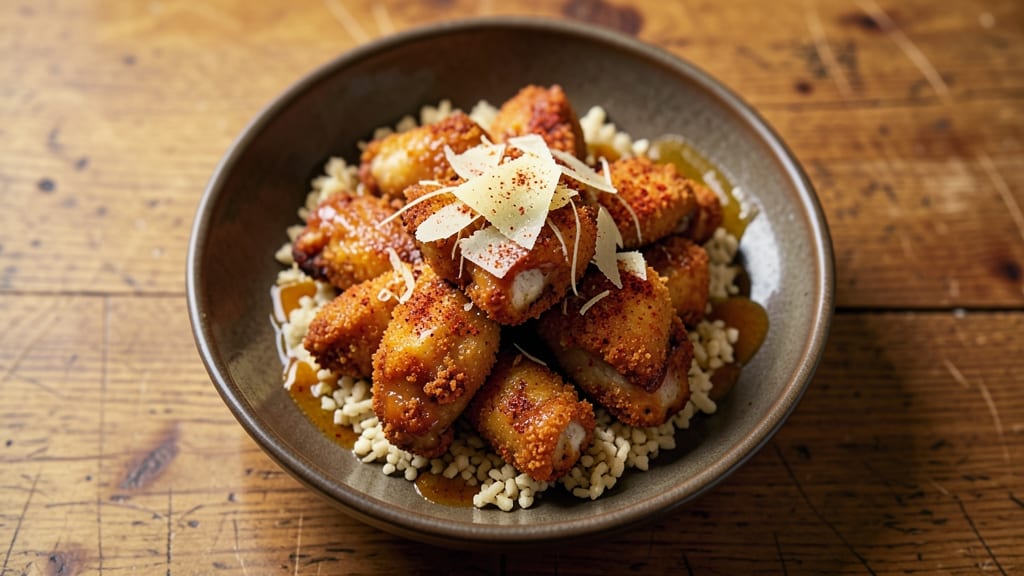
This fireman's chicken recipe delivers the signature crispy celery crown and buttery ranch coating that makes it a Southern classic. The combination of spicy seasoning and golden breading creates a dish that's impossible to resist.
I've perfected the technique over years of testing, ensuring the celery stays crisp and the chicken stays tender underneath that crunchy exterior.
What sets this recipe apart is the balance of flavors and textures—spicy, crispy, and creamy all in one bite. The dry rub infuses the chicken with bold seasoning while the celery crown adds a unique crunch that no other fried chicken recipe can match.
This method keeps the cooking process straightforward but delivers restaurant-quality results every time.
By the end, you'll have perfectly golden chicken with a celery crown that stays crisp and a buttery ranch coating that ties everything together. The dish is hearty enough to be the star of any meal, yet simple enough to prepare on a weeknight.
Serve with classic sides like mashed potatoes or coleslaw for the full Southern experience.
This recipe works equally well for gatherings or a cozy family dinner, making it versatile for any occasion. The key is maintaining the right temperature when frying and ensuring the celery crown stays perfectly crisp. Let's get started on creating this Southern favorite in your own kitchen.
Ingredients for fireman's chicken
The secret to perfect Fireman's Chicken lies in balancing crispy celery crowns and buttery ranch coating.
| Ingredient | Amount | Notes |
|---|---|---|
| Boneless, Skinless Chicken Thighs 🍗 | 2 lb | Cut into even-sized pieces |
| Celery Stalks 🥬 | 1 bunch | Thinly sliced, about 2 cups |
| All-Purpose Flour 🌾 | 1 ½ cups | For dredging chicken pieces |
| Butter, Unsalted 🧈 | ½ cup | Melted for coating |
| Ranch Seasoning Mix 🧂 | 2 tbsp | Homemade or store-bought |
| Yellow Cornmeal 🌽 | ½ cup | For crispy coating |
| Vegetable Oil 🫒 | 3 cups | For frying, 350°F |
| Cayenne Pepper 🔥 | ½ tsp | Adjust for heat preference |
| Garlic Powder 🧄 | 1 tsp | Freshly ground preferred |
| Onion Powder 🧅 | 1 tsp | For dry rub |
| Paprika 🌶️ | 1 tbsp | Smoked for depth |
| Salt 🧂 | 1 ½ tsp | Kosher or sea salt |
| Black Pepper 🌶️ | ½ tsp | Freshly ground |
| Buttermilk 🥛 | ½ cup | For marinating chicken |
| Eggs 🥚 | 1 whole | Beaten for coating |
The celery crown is non-negotiable for that signature crunch. Look for fresh, crisp stalks with vibrant green tops—avoid any with wilted leaves or yellowing. Trader Joe's and local farmers markets often carry the freshest celery, but the regular grocery store variety works if it's firm and bright. For the chicken, thighs are ideal—they stay juicier than breasts during frying. If you can't find boneless thighs, skin-on, bone-in thighs work too, but you'll need to trim the skin carefully. The cornmeal should be fine-ground for an extra-crispy texture, and Bob's Red Mill is a reliable brand if you're buying in bulk.
No ranch seasoning mix? Mix 1 tbsp dried dill, 1 tbsp dried parsley, 1 tsp onion powder, and 1 tsp garlic powder for a quick substitute. For the celery, substitute thinly sliced green onions or jicama if needed, though neither has the same satisfying crunch. If you're avoiding gluten, use a gluten-free flour blend for dredging instead of all-purpose flour. The buttermilk marinade is crucial—it tenderizes the chicken and helps the coating stick. If you're short on time, sour cream thinned with milk works in a pinch, but the tanginess of buttermilk can't be beat.
Keep the celery covered in cold water until ready to use—this preserves its crispness. The fried chicken reheats best in a 350°F oven for 10-15 minutes to restore crispiness. Store leftovers in an airtight container for up to 3 days, though the celery crown loses its crunch after a day. For freezing, coat the chicken in extra cornmeal before freezing—this protects the celery from sogginess when reheated. Portion into single servings before freezing for easy meals later.
Why You'll Love This Recipe
- One-Pan Wonder: I swear by this recipe when I’m too tired to scrub three pots. The celery and ranch mix create a sticky, savory crust while the butter bastes the chicken—all on one sheet pan. (Yes, even on a Tuesday night.)
- Crispy-Creamy Magic: That golden flour crust meets tender chicken? It’s the kind of bite that makes you pause mid-bite. The ranch seasoning cuts through the richness, leaving you with a flavor that’s both comforting and exciting.
- Budget Meal Hero: Chicken thighs are forgiving and cheap, and the celery stretches further than you’d think. I’ve fed six people for under $15, with leftovers that taste just as good reheated as they do fresh. (My wallet and my family approve.)
Step-by-step instructions for crispy celery crown chicken
Here's how to achieve that signature crispy celery crown with tender, flavorful chicken every time.
Prepare the Chicken for Maximum Crispiness
Cut the 2 lb boneless, skinless chicken thighs into even-sized pieces, about 1-inch thick. This ensures even cooking and a perfect bite. In a large bowl, whisk together the 0.5 cup buttermilk, 1 whole eggs, 1.5 tsp salt, 0.5 tsp black pepper, 1 tsp garlic powder, 1 tsp onion powder, and 2 tbsp ranch seasoning mix. Add the chicken pieces and let them marinate for at least 30 minutes—this step guarantees tender, flavorful meat.
While the chicken marinates, prepare the celery crown. Thinly slice the 1 bunch celery stalks (about 2 cups) into matchstick-sized pieces. Set aside in a separate bowl. The celery will absorb the buttery coating, creating that iconic crispy crown.
Create the Crispy Coating
In a shallow dish, combine the 1.5 cups all-purpose flour, 0.5 cup yellow cornmeal, 1 tbsp paprika, and 0.5 tsp cayenne pepper. This blend gives the chicken its signature texture and flavor. For the celery, mix the sliced stalks with 1 tbsp ranch seasoning mix, 0.5 tsp garlic powder, and 0.5 tsp onion powder in a separate bowl.
Remove the chicken from the marinade, letting any excess drip off. Dredge each piece thoroughly in the flour-cornmeal mixture, pressing gently to adhere the coating. Repeat the dredging process for the celery, ensuring every piece is evenly coated. This double-coating ensures maximum crispiness when fried.
Fry to Golden Perfection
Heat 3 cups vegetable oil in a deep skillet or Dutch oven to 350°F. Use a thermometer to monitor the temperature—consistent heat is key for even cooking. Fry the chicken pieces in batches, 3-4 minutes per side, until they reach 165°F internally and develop a deep golden-brown crust. Remove and drain on a wire rack or paper towels to maintain crispiness.
In the same oil, fry the celery crown for 1-2 minutes, stirring constantly, until it turns a vibrant golden brown. The celery should be crispy but still hold its shape. Work in small batches to avoid overcrowding, which can lower the oil temperature and result in soggy celery.
Finish with Buttery Ranch Bliss
Melt the 0.5 cup unsalted butter in a separate skillet over medium heat. Once fully melted, add the fried chicken pieces and toss to coat evenly in the butter. The residual heat will create a glossy, buttery finish that ties everything together. Transfer the chicken to a serving platter, arranging the celery crown on top in an even layer.
Serve immediately while the chicken is still crispy and the celery crown is at its peak texture. The combination of tender, buttery chicken and the crispy celery crown delivers that classic Fireman's Chicken experience. Enjoy with a side of ranch dressing for dipping if desired.
Pro Tips For Making Fireman'S Chicken
- PAT THE THIGHS DRY: Fireman’s chicken relies on that crispy flour crust, and wet chicken ruins it. Grab paper towels and press hard—even if they’re still slightly damp, the extra friction helps the flour cling better. I used to skip this, and my first batch always tasted soggy underneath.
- COOK IN BATCHES: Overcrowding the pan steams the chicken instead of searing it. Work in two batches if needed—just 3-4 thighs at a time in enough butter to coat the bottom. After burning three batches, I finally figured out this isn’t a deep-fryer.
- TOSS FLOUR IN BUTTER: Mixing the ranch seasoning with flour first is fine, but tossing a spoonful of flour directly into the melted butter before dredging the chicken creates a richer, more flavorful crust. It’s a tiny step, but it makes a real difference in texture and taste.
- REST THE CHICKEN: Let the seared thighs sit for 5 minutes under foil before serving—yes, even if you’re impatient. This lets the juices redistribute instead of pooling out when you cut in. I know, I know, but trust the process.
Troubleshooting your fireman's chicken
Oil Too Hot?
If your celery crown turns dark too quickly (in under 1 minute) or the chicken cooks unevenly, your oil is too hot. I use a ThermoWorks digital thermometer to keep oil at a steady 350°F.
If it spikes above 375°F, remove the pan from heat for 1-2 minutes to let it cool down. Overheated oil burns the coating and makes the celery bitter. 🌡️
Soggy Celery Crown
The celery crown loses crispiness when fried in batches that are too large or when left sitting in the oil too long. Fry in small batches of ½ cup celery at a time, stirring constantly for 1-2 minutes.
Immediately drain on a wire rack—not paper towels—to preserve that satisfying crunch. If using leftover oil, strain it through a fine-mesh sieve to remove any breading debris that could make the next batch soggy.
Chicken Too Greasy
Excessive greasiness usually means the chicken absorbed too much oil during frying. Double-check your marinade—excess buttermilk can make the coating less effective. Pat each piece very dry with paper towels before dredging.
For extra insurance, chill the coated chicken in the fridge for 15-20 minutes before frying. This firms up the coating and reduces oil absorption. 💡
Uneven Cooking
If some pieces of chicken are undercooked while others are overdone, your pieces aren’t uniform in size. Trim all chicken pieces to the same 1-inch thickness before marinating. For extra insurance, use a meat thermometer to check the thickest part of each piece—it should reach 165°F internally.
If using frozen chicken, thaw it completely first to prevent uneven cooking.
Celery Not Crispy
Celery turns mushy when it absorbs too much moisture. Drain it thoroughly after slicing and pat it dry with paper towels. For extra crispiness, toss the sliced celery with 1 tbsp cornstarch before dredging in the flour mixture.
This creates a protective barrier against moisture. Also, fry the celery immediately after coating—don’t let it sit for more than 5 minutes before hitting the hot oil.
Ranch Coating Too Dry
If the ranch coating falls off or looks dry, the butter wasn’t hot enough when tossing. Melt the butter over medium-high heat until it’s fully liquid and slightly foamy. Toss the fried chicken in the butter while it’s still sizzling—this helps the coating adhere better.
For extra richness, add 1 tbsp melted butter to the flour mixture before dredging the chicken.
Nutrition facts
Frequently asked questions
Why is celery used as the "crown" for this dish?
The celery crown isn't just decorative—it creates a signature crunch that contrasts perfectly with the tender chicken. Thinly sliced celery absorbs the buttery ranch coating beautifully while staying crisp, adding both texture and a subtle freshness to balance the spicy, fried flavors.
Can I make Fireman's Chicken without frying?
Yes! For a healthier version, bake the coated chicken and celery at 400°F for 20-25 minutes, flipping halfway. Use an oven-safe skillet with 1 tbsp oil sprayed on the bottom for crispiness. The celery will still get golden and crunchy, though slightly less crisp than fried.
What's the best way to store leftovers?
Store in an airtight container for up to 3 days, but the celery crown loses crispness after 1 day. Reheat chicken in a 350°F oven for 10-15 minutes on a wire rack to restore crispiness. For longer storage, freeze uncooked coated chicken pieces (with celery crown) for up to 2 months.
How spicy should Fireman's Chicken be?
The cayenne pepper gives it a mild kick—adjust to taste! For extra heat, add ¼ tsp cayenne to the flour mixture or serve with hot sauce on the side. The ranch coating naturally balances the spice, so don't be afraid to experiment with your preferred heat level.
Can I use chicken breasts instead of thighs?
Chicken breasts work but require extra care—they dry out faster. Pound them to ½-inch thickness and marinate for 1-2 hours (not just 30 minutes) to ensure tenderness. Fry at 325°F instead of 350°F to prevent overcooking. The celery crown method stays the same!