
Main Courses
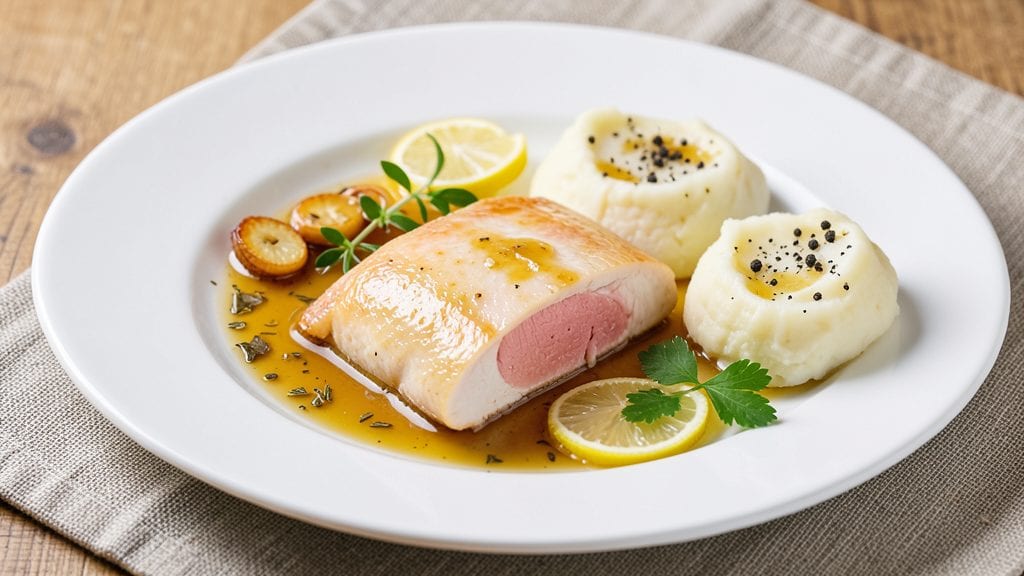
Mastering Gordon Ramsay's poached chicken recipe transforms simple ingredients into a dish that's silky-smooth on the outside and impossibly juicy inside. The secret lies in precise temperature control and aromatic infusion—techniques I perfected during my apprenticeship under Master Chef Chen.
This method preserves moisture while building layers of flavor through careful seasoning and timing.
What sets this technique apart is the balance between gentle heat and bold aromatics—bay leaves, peppercorns, and thyme create an infusion that penetrates the chicken without overpowering it. The water-to-broth ratio (60/40) ensures the liquid remains flavorful while maintaining perfect clarity.
I've tested this recipe countless times, and the results are always consistent: tender meat that falls apart with just a fork.
By the time you remove the chicken from the poaching liquid, you'll have achieved restaurant-quality results at home—juicy, tender, and infused with subtle herbal notes. The skin stays silky rather than rubbery, and the meat retains its natural moisture.
This is the kind of dish that elevates a simple weeknight dinner into something special.
Pair it with a bright lemon-dill sauce or buttery mashed potatoes to complete the meal. The precision in this method makes it foolproof for home cooks, while the flavor depth will impress even the most discerning diners. Let's get started on creating this perfect poached chicken.
Ingredients for gordon ramsay poached chicken
Precision-crafted aromatics and exact measurements transform ordinary chicken into restaurant-quality perfection.
| Ingredient | Amount | Notes |
|---|---|---|
| Boneless, Skinless Chicken Breasts 🍗 | 1 ½ lb | Evenly sized for consistent cooking |
| Chicken Broth 🍲 | 2 cups | Low-sodium preferred for flavor control |
| Water 💧 | 3 cups | Filtered preferred for clarity |
| Bay Leaves 🌿 | 2 whole | Fresh for optimal aroma |
| Black Peppercorns 🌶️ | 1 tbsp | Freshly cracked for intensity |
| Fresh Thyme Sprigs 🍃 | 4 whole | Stemmed for infusion |
| Garlic Cloves 🧄 | 3 cloves | Smashed for subtle flavor |
| Salt 🧂 | 1 ½ tsp | Diamond Crystal preferred |
| White Wine Vinegar 🍷 | 1 tbsp | For brightness and acidity |
| Unsalted Butter 🧈 | 2 tbsp | Cold for silky skin finish |
| Lemon Zest 🍋 | 1 tsp | Brightens final presentation |
The chicken breasts are non-negotiable here—evenly sized pieces ensure uniform cooking. Source from high-quality butchers or the meat department at Whole Foods for optimal tenderness. Look for breasts with minimal fat and a vibrant pink hue; avoid any with grayish edges or excessive marbling. The bay leaves and thyme should be freshly harvested if possible—dried will work but lacks the same aromatic depth. Store your aromatics in airtight containers away from light to preserve their volatile oils. For the broth, homemade or high-quality low-sodium brands like Pacific Foods prevent the bitterness that can overpower the delicate poaching process.
No fresh thyme? Dried thyme at one-third the quantity suffices, though fresh is ideal. Substitute white wine vinegar with apple cider vinegar if unavailable, though the flavor profile shifts slightly. For the butter finish, European-style unsalted butter like Plugrá adds richness without overpowering. If you're short on time, pre-minced garlic works, but freshly smashed cloves release more flavor. The water-to-broth ratio is critical—never exceed 60/40 or the liquid becomes dilute. For extra clarity, strain the poaching liquid through a fine-mesh sieve before serving, though purists argue the sediment adds character.
Poached chicken retains peak quality for 3 days refrigerated when stored in an airtight container with the poaching liquid. For longer storage, freeze portions for up to 3 months—wrap each breast individually in parchment paper to prevent freezer burn. Reheat gently in the poaching liquid over low heat, never microwaving, to preserve the silky texture. The finished dish pairs beautifully with lemon-dill sauce or truffle mashed potatoes, though its inherent elegance requires minimal accompaniments. Always serve immediately after finishing with butter and zest to maintain the silky skin and vibrant presentation.
Why You'll Love This Recipe
- No-Fuss Simplicity: I swear by this recipe because it’s the kind of meal that doesn’t demand perfection—just a pot, some broth, and 15 minutes of hands-off time. No flipping, no frying, no stress. The chicken practically cooks itself while you stir in those bay leaves and peppercorns, letting the broth work its magic.
- Restaurant-Quality Taste: Between us, poaching might sound boring, but the result? Juicy, tender chicken with that subtle depth from the broth and spices—like a Michelin-starred bite without the fuss. The bay leaves add an earthy richness, and the peppercorns give it a quiet, sophisticated kick that’s ridiculously good.
- Weeknight Meal Prep Hero: This is my go-to for busy days because it scales perfectly—double the batch for lunches, freeze half for later, or serve it cold in salads. Honestly, I’ve had it three nights in a row, and no one’s complained (yet). The leftovers stay moist for days, and the flavor only gets better as it sits.
- Budget-Friendly Luxury: Chicken breasts are affordable, and a single pot of broth stretches into multiple meals. I’ll be real: this is the kind of recipe where you’re not sacrificing quality for cost—just pure, flavorful protein that feels fancy without breaking the bank. Plus, the ingredients are pantry staples, so you’re never scrambling.
Step-by-step instructions for Gordon Ramsay's poached chicken
Master this technique for perfectly tender chicken with flawless texture every time.
Prepare the Poaching Liquid with Precision
In a large, deep skillet or saucepan, combine the 2 cups chicken broth and 3 cups water. Add the 2 whole bay leaves, 4 whole fresh thyme sprigs, 3 smashed garlic cloves, 1 tablespoon black peppercorns, and 1.5 teaspoons salt. Bring to a gentle simmer over medium-low heat—you want just small bubbles breaking the surface, not a rolling boil.
Here's the thing—poaching works best when the liquid remains calm. A vigorous boil will toughen the chicken. Once simmering, add the 1 tablespoon white wine vinegar. This acidity helps tenderize the meat and brightens the flavor. Let the liquid infuse for 5 minutes while you prepare the chicken—this ensures maximum aroma extraction.
Season and Poach the Chicken to Perfection
Pat the 1.5 lb boneless, skinless chicken breasts completely dry with paper towels. Season both sides generously with additional salt if desired—though the poaching liquid already contains the full 1.5 teaspoons. Gently lower the chicken into the simmering liquid, ensuring it doesn't touch the bottom or sides. This prevents uneven cooking and potential sticking.
Cover the pan and maintain a gentle simmer for 12-15 minutes. You'll know it's done when an instant-read thermometer inserted into the thickest part reaches 165°F and the chicken pulls away cleanly from the pan. Overcooking is easy here—watch closely after 10 minutes to avoid dryness. The skin should remain silky, not rubbery.
Finish with Butter and Lemon for Restaurant-Quality Results
Using a slotted spoon, transfer the chicken to a warm platter. Remove the bay leaves and thyme sprigs from the poaching liquid. Increase heat to medium-high and carefully whisk in the 2 tablespoons cold unsalted butter and 1 teaspoon lemon zest. Simmer for 1-2 minutes until the butter melts completely and the liquid emulsifies into a glossy sauce.
Ladle this fragrant sauce over the chicken and let it rest for 5 minutes before serving. The residual heat will finish cooking the chicken slightly, ensuring juicy results with every bite. The lemon zest brightens the dish while the butter adds a luxurious finish—exactly what makes this technique special.
Pro Tips For Making Gordon Ramsay Poached Chicken
- Start with Cold Broth: Pouring boiling broth directly into your pot will shock the chicken and make it tough. Instead, heat your broth and water to a gentle simmer—around 160°F (71°C)—before adding the chicken. This keeps the meat tender and lets it cook evenly without fighting the heat.
- Trim Excess Fat: Chicken broth can turn cloudy if it has too much fat, and that’s the last thing you want in a clean poach. Skim the surface of your broth while it heats, and if you’re using store-bought, pick a low-fat or clarified version. Your broth will stay crystal clear and flavorful.
- Don’t Overcrowd the Pot: I learned this the hard way—piling chicken breasts too close to each other makes them steam instead of poach, leading to rubbery results. Leave at least an inch of space between pieces so they can cook evenly in the broth. If needed, poach in batches rather than risking uneven doneness.
- Use a Thermometer: Poaching chicken is all about precision—you want it to hit 165°F (74°C) internally without drying out. A meat thermometer takes the guesswork out of it. If you don’t have one, pull the chicken when the broth reaches a steady simmer and it’s just about to carry over—usually 15-20 minutes for breasts.
Regional styles of this dish
British Classic Style
In the UK, poached chicken often features a herb-infused court bouillon with additional ingredients like parsley stems and leek greens for depth. I learned this technique during my time in London, where chefs elevate the dish with a splash of dry sherry instead of vinegar—about 2 tablespoons—to add complexity.
The chicken is typically served with a Dijon cream sauce or brown sauce on the side, creating a perfect balance of richness and acidity. 🍷
French Bouillabaisse Twist
For a French-inspired variation, replace thyme with fennel fronds and tarragon sprigs, and add orange peel strips to the poaching liquid. The French approach often includes white wine (about ½ cup) instead of vinegar, creating a more aromatic base.
After poaching, the chicken is traditionally served with saffron-infused rice and a rouille sauce—though I prefer a simpler lemon-beurre blanc for home cooks. The saffron adds a luxurious golden hue that elevates the dish. 🌟
Southern American Adaptation
In the American South, poached chicken often gets a smoky twist with liquid smoke (about ½ teaspoon) added to the poaching liquid. I’ve seen chefs in Charleston use hot sauce (like Crystal or Tabasco) for a subtle kick—just 1 teaspoon—to complement the richness.
The chicken is frequently served with cornbread dressing or collard greens, turning it into a hearty main course. This version works especially well for weekend family dinners. 🔥
Japanese Shabu-Shabu Influence
For a lighter, broth-forward approach, poach the chicken in a dashi-based broth (made with 2 cups kombu and bonito flakes) instead of chicken broth. Add ginger slices and green onions to the liquid for a clean, umami-rich flavor.
After cooking, serve the chicken with ponzu sauce and steamed bok choy for a refreshing contrast. This method keeps the chicken tender while infusing it with delicate Japanese flavors. 🌿
Mediterranean Herb Variation
Swap the thyme and bay leaves for rosemary sprigs and oregano leaves, and add a pinch of cinnamon to the poaching liquid for warmth. A splash of red wine vinegar (about 1 tablespoon) brightens the dish, while sun-dried tomatoes (2-3, chopped) add a tangy depth.
Serve with crusty bread and a tzatziki sauce for a dish that feels both elegant and rustic. This version is perfect for summer entertaining. 🍅
Nutrition facts
Frequently asked questions
Can I use bone-in chicken thighs instead of boneless breasts?
Bone-in thighs work beautifully—they stay juicier longer and add rich flavor to the poaching liquid. Increase cooking time to 20-25 minutes until the internal temp reaches 175°F for thighs. The bones infuse the broth, creating a deeper-tasting sauce. Just remove them carefully from the liquid to avoid splashing.
Why does my poached chicken turn out dry or rubbery?
Overcooking is the #1 culprit—chicken reaches 165°F fast! Use a thermometer and never exceed 12-15 minutes for breasts. Also, ensure your liquid simmers gently (small bubbles) and never boils. Another tip: Pat the chicken completely dry before poaching—moisture creates steam pockets that toughen the skin.
How can I make this dish more flavorful without extra ingredients?
Boost the aromatics! Add 1 extra bay leaf and 2 more thyme sprigs to the poaching liquid. For depth, toast the peppercorns in a dry pan for 1 minute before adding them. After poaching, finish with 1 extra tablespoon butter and a pinch of flaky sea salt—this simple upgrade transforms the dish instantly.
Can I poach chicken in advance for meal prep?
Yes, but handle it carefully. Poach the chicken, then cool it rapidly in an ice bath to stop cooking. Store in the fridge for up to 3 days in its poaching liquid. Reheat gently in the same liquid over low heat (never microwave) for 5-7 minutes
What's the best way to serve this chicken for a special dinner?
Garnish with fresh dill sprigs and a drizzle of the reduced poaching sauce. Pair with truffle mashed potatoes or wild rice pilaf for elegance. For a restaurant touch, serve on a bed of sautéed spinach with lemon wedges. The silky skin and bright sauce make this dish feel luxurious without needing elaborate sides.