
Side Dishes
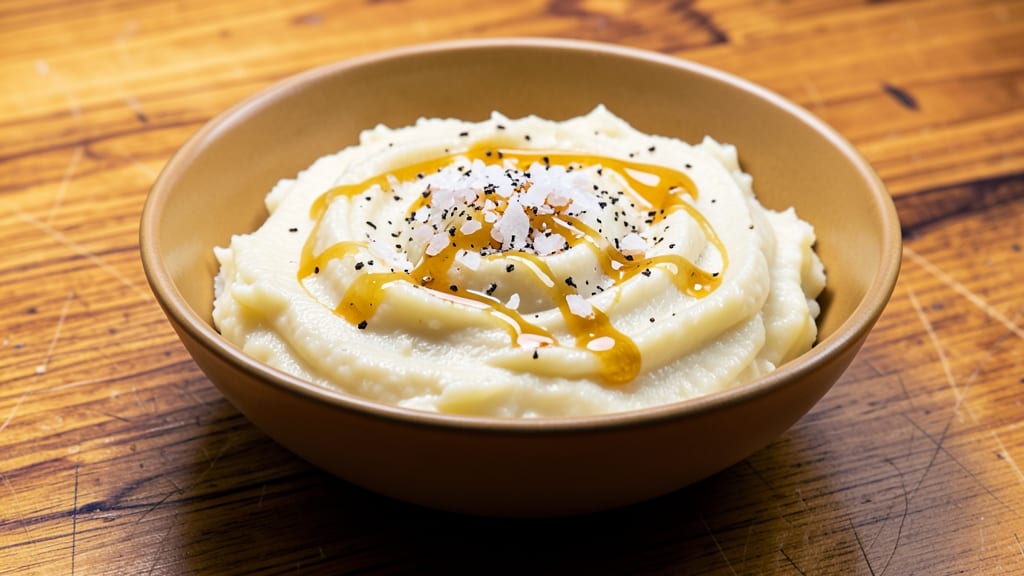
This mashed potatoes with chicken stock recipe transforms a classic side into a velvety, restaurant-worthy centerpiece—where every spoonful delivers deep umami richness and ultra-smooth texture.
Growing up in Georgia, I learned that good mashed potatoes start with flavorful stock, not just butter and milk, and this method proves why that matters. The secret lies in infusing the stock into the potatoes while they cook, creating a foundation that’s far more complex than traditional recipes allow.
What sets this apart is the technique: low-and-slow simmering with homemade chicken stock (or high-quality store-bought) ensures the potatoes absorb maximum flavor without breaking down into glue.
We’re talking creamy, lighter mashed potatoes that cling to the fork—not the bowl—while still packing the hearty satisfaction of a proper side dish. The result is a texture so refined it’ll fool even the most discerning dinner guests into thinking you spent hours on prep.
By the time you’re done, you’ll have golden, silky mashed potatoes with a depth of flavor that turns an ordinary meal into something special. The chicken stock doesn’t just season—it transforms, adding layers of savory complexity that elevate these potatoes from sidekick to star.
This is the kind of dish that pairs perfectly with roasted meats, holiday feasts, or even as a standalone comfort food when you crave something truly indulgent.
Ready in under 45 minutes with just 6 ingredients, this recipe delivers professional-quality results without the fuss. The key? Patience in the cooking process and a light hand with the butter—trust me, less is more when it comes to achieving that velvety finish.
Let’s get to work on making the creamiest mashed potatoes you’ve ever tasted.
Ingredients for mashed potatoes with chicken stock
Six ingredients, one technique: transform ordinary potatoes into velvety, restaurant-worthy mashed potatoes with chicken stock's deep umami magic.
| Ingredient | Amount | Notes |
|---|---|---|
| Russet Potatoes 🥔 | 2 ½ lb | Medium size, peeled and quartered |
| Homemade Chicken Stock 🍗 | 2 cups | High-quality, homemade or store-bought |
| Unsalted Butter 🧈 | ½ cup | Cold, cut into small pieces |
| Heavy Cream 🥛 | ½ cup | Full-fat for creaminess |
| Diamond Crystal Kosher Salt 🧂 | 1 tsp | Adjust to taste |
| Freshly Ground Black Pepper 🌶️ | ¼ tsp | Freshly cracked for best flavor |
The potatoes are non-negotiable here—Russets are your best bet for their fluffy texture. Yukon Golds work too, but they’ll lean slightly richer. Skip the red potatoes; they turn gluey. Buy a 2.5-pound bag—you’ll use most of it. Peeled and quartered, they cook faster and more evenly. For the stock, homemade is ideal, but Pacific Foods or Imagine brands are solid store-bought options. The key? Low-sodium if you’re adding extra salt later, or regular if you’re tasting as you go. Fresh stock tastes like heaven, but even a 2-day-old batch works in a pinch.
No heavy cream? Whole milk plus a splash of cream mimics the texture. Butter running low? Ghee gives a similar richness without burning. The salt is where you’ll taste the difference—Diamond Crystal dissolves perfectly, but Maldon add a nice finish if you’re garnishing. Freshly ground black pepper is worth it; pre-ground tastes flat. Want extra flavor? Roast the potatoes first in their skins at 400°F for 30 minutes—the caramelization adds depth. No roasting? A pinch of smoked paprika in the stock does the trick.
Potatoes keep 3 days in the fridge, but cook them fresh for best texture. Stock can be prepped ahead and refrigerated for 5 days or frozen for 3 months. The butter and cream? Use within 2 weeks of opening. For leftovers, reheat with a splash of milk or stock—microwaving dries them out. Portion into ramekins for serving, or freeze in ziplock bags for up to 3 months. Thaw overnight in the fridge before reheating.
Why You'll Love This Recipe
- I swear by this combo: Russets and stock. No peeling, no fuss—just scrub, cube, and boil. The stock infuses flavor without extra steps, and the butter-cream finish happens in minutes while you’re still setting the table.
- Two-Ingredient Magic: I swear by this combo: Russets and stock. No peeling, no fuss—just scrub, cube, and boil. The stock infuses flavor without extra steps, and the butter-cream finish happens in minutes while you’re still setting the table.
- Rich Without Effort: That homemade chicken stock? It’s the secret weapon. The deep, savory notes cut through the creaminess, and the kosher salt—just a pinch—balances everything perfectly. Honestly, it tastes like you slaved over it, even though you didn’t.
- Weeknight & Holiday: Same recipe, different vibes. Serve it alongside roasted chicken for a cozy Tuesday or pile it high for Thanksgiving. The cream keeps it luxurious, but the stock keeps it real—no one will guess it’s this easy.
Step-by-step instructions for creamy mashed potatoes with chicken stock
Here's how to transform simple russets into silky, restaurant-worthy mashed potatoes every time.
Boil the Potatoes Until Fork-Tender
Place the peeled and quartered 2.5 lb russet potatoes in a large pot and cover them with cold water by about 2 inches. Add 1 teaspoon of the diamond crystal kosher salt to the water—this helps season the potatoes as they cook. Bring to a rolling boil over high heat, then immediately reduce to a gentle simmer.
Simmer uncovered for 15-20 minutes until the potatoes are fork-tender. You'll know they're ready when a fork slides in easily with just slight resistance. Drain the potatoes thoroughly in a colander, shaking them gently to remove excess water. The reason we drain so completely is that any remaining moisture will make your mashed potatoes watery instead of velvety.
Heat the Chicken Stock and Butter
While the potatoes are cooking, measure out the 2 cups homemade chicken stock and pour it into a small saucepan. Place the saucepan over medium heat and bring the stock to a gentle simmer. This preheated stock will help create steam when combined with the hot potatoes, which is key to achieving that ultra-smooth texture.
In a separate small bowl, cut the 0.5 cup unsalted butter into small pieces. This cold butter will create pockets of richness in your mashed potatoes. Keep the butter at room temperature—it should soften slightly but not melt completely before adding to the potatoes.
Mash the Potatoes to Perfection
Return the drained potatoes to the now-empty pot and place it over medium-low heat. Add the 0.5 cup heavy cream and the preheated 2 cups chicken stock. Stir gently to combine, letting the steam from the hot liquid help break down the potatoes further. Keep the heat at medium-low to prevent the mixture from boiling.
Using a potato masher or wooden spoon, mash the potatoes until they reach your desired consistency. I like to leave mine slightly lumpy for texture, but you can use a ricer or food mill for completely smooth results. The key here is to work quickly—don't let the mixture sit too long on the heat or it will dry out.
Incorporate Butter and Season
Remove the pot from heat and add the small pieces of cold butter. Using a wooden spoon or electric mixer, beat the butter into the potatoes until fully incorporated. The butter should melt into the potatoes, creating a rich, velvety texture. If you're using an electric mixer, mix on low speed to avoid splattering the hot mixture.
Taste and adjust seasoning with additional diamond crystal kosher salt and 0.25 teaspoon freshly ground black pepper if needed. The freshly cracked pepper adds a bright finish that cuts through the richness of the butter and cream. For an extra touch, you can press a garlic clove through a garlic press or add a pinch of nutmeg if you like.
Serve Immediately for Maximum Creaminess
Transfer the mashed potatoes to a serving bowl and smooth the surface with a spatula. The secret to serving these potatoes at their best is to do it immediately—they thicken as they cool. If you need to hold them for a few minutes before serving, cover the bowl with a tight-fitting lid or plastic wrap to trap the steam and prevent drying.
Each serving should be luxuriously smooth with a creamy texture that melts in your mouth. The chicken stock adds depth of flavor without overpowering the potatoes, while the butter and cream create that signature velvety finish. Serve with your favorite protein and a simple green salad for a complete meal.
Pro Tips For Making Mashed Potatoes With Chicken Stock
- BOIL POTATOES UNPEELED: I learned this the hard way—peeling Russets first makes them waterlogged and gummy. Leave the skins on until after boiling, then slip them out while warm. The skins hold moisture like a sponge, and you’ll end up with fluffier mash. (Yes, even if you’re impatient like me.)
- STRAIN STOCK THOROUGHLY: Homemade chicken stock is full of good stuff, but not if it’s cloudy. Strain it through a fine-mesh sieve or cheesecloth before using—fat and bits will make your mash greasy. My grandmother swore by this, and she was right: the cleaner the stock, the richer the flavor without heaviness.
- WARM CREAM AND BUTTER: Cold heavy cream and butter will shock your hot potatoes, making them grainy. Microwave the cream for 10 seconds and melt the butter until just liquid. Stirring in warm fats keeps the texture silky, not clumpy. (Your future self will thank you.)
- SALT THE POTATOES FIRST: Russets soak up salt like a sponge—add 1 teaspoon Diamond Crystal kosher salt to the boiling water. This seasons the flesh before mashing, so you won’t need to over-salt later. I skip this when I’m lazy, but the dish is noticeably better when I don’t.
Essential equipment for mashed potatoes with chicken stock
Potato Prep Tools
The right tools make all the difference when peeling and quartering potatoes. I swear by a sharp chef’s knife—I use my Victorinox Fibrox—and a mandoline slicer for even cuts if you’re feeling fancy.
For peeling, a Y-peeler is faster than a paring knife, and it leaves fewer eyes behind. Store these in your kitchen prep station where they’re easy to grab. 🥔
Cooking Essentials
A large, heavy-bottomed pot is non-negotiable—your All-Clad stainless steel or Lodge cast iron will handle the potatoes without scorching. I use a 6-quart Dutch oven for even heat distribution. For draining, a fine-mesh colander with long handles (like OXO Good Grips) prevents spills.
Pro tip: Keep a towel nearby to wipe down the pot after draining—it makes cleanup a breeze. ⚡
Mashing Must-Haves
For texture control, I recommend a potato ricer (like OXO’s) for silky-smooth results, but a wooden potato masher works just fine if you prefer slight lumps. A hand mixer (like KitchenAid’s 5-speed) saves time when incorporating butter, but a sturdy wooden spoon does the job too.
My secret weapon? A fine-mesh sieve to strain any stray potato bits before serving—it adds that restaurant-quality finish. 💫
Butter and Cream Tools
Cold butter needs a sharp knife to cut into small pieces—my Wüsthof Ikon does this perfectly. For measuring, a digital kitchen scale (like Escali Primo) ensures precision, but a liquid measuring cup works for the heavy cream.
I store my butter in a glass butter dish in the fridge to keep it fresh longer. A small saucepan for heating the stock is ideal—just make sure it’s wide enough to prevent boiling over. 🧈
Seasoning and Serving
Freshly ground black pepper deserves a pepper grinder (I love Baratza Encore), and Diamond Crystal kosher salt is my go-to for even dissolving. For serving, ramekins or a ceramic bowl keeps the potatoes warm, while a ladle helps portion perfectly.
I garnish with a sprinkle of Maldon flaky salt or a drizzle of truffle oil for that extra touch—just use a small squeeze bottle for clean lines. ✨
Nutrition facts
Frequently asked questions
Why does chicken stock make mashed potatoes taste better than milk or cream?
The stock adds umami depth and savory complexity that dairy alone can't match. The natural collagen and caramelized flavors from slow-cooked bones create layers of taste that elevate the potatoes from simple side to star dish. Plus, it helps balance the richness of butter and cream without making them heavy.
Can I make these mashed potatoes ahead of time?
Yes, but with a few key adjustments. Cook and mash the potatoes as directed, then refrigerate in an airtight container for up to 2 days. To reheat, warm with a splash of fresh stock or milk over low heat, stirring constantly until creamy. For best texture, add cold butter at the end to restore richness. They won't be quite as silky as fresh, but still delicious!
What's the best way to keep mashed potatoes from getting gluey?
Overworking the potatoes is the #1 culprit! Drain them thoroughly after boiling, and mash just until smooth—don't puree. Also, keep the heat low when incorporating liquids, and remove from heat immediately after adding butter. For extra insurance, let them rest 5 minutes before serving to thicken naturally.
Can I substitute vegetable stock for chicken stock?
but the flavor profile will change. Vegetable stock works well for vegetarian versions, though it lacks the meaty depth of chicken. For balance, add a teaspoon of soy sauce or Worcestershire sauce to mimic umami. If using low-sodium stock, taste and adjust salt accordingly—vegetable stocks are often milder.
How do I make these potatoes extra creamy without heavy cream?
Try this trick: Replace the heavy cream with equal parts whole milk and Greek yogurt (or sour cream). The yogurt adds protein for creaminess while keeping it lighter. For even more body, mash in 1/4 cup ricotta cheese at the end. The result is rich, velvety texture with a tangy brightness that cuts through the butter's richness.