
Main Courses
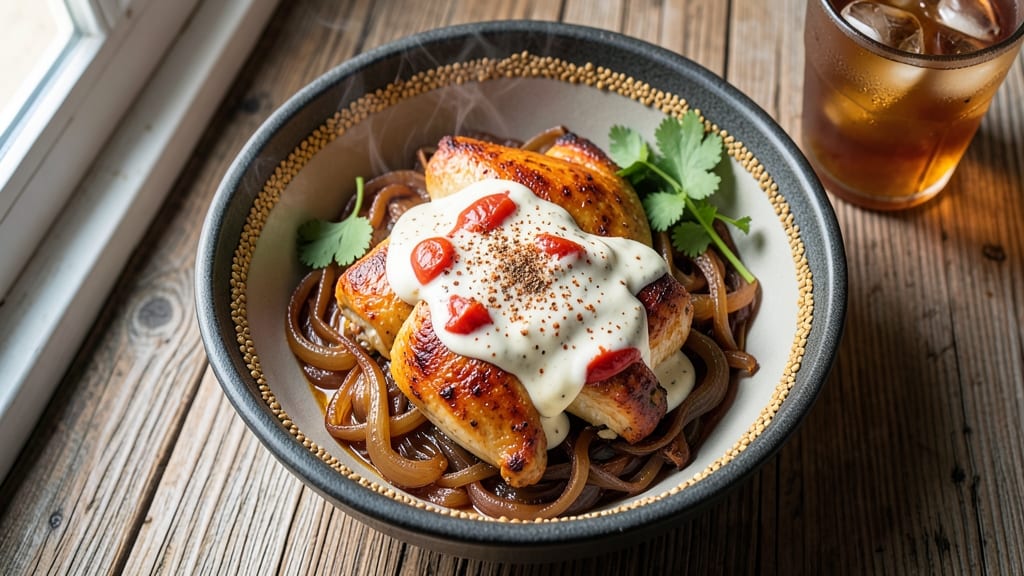
This American chicken curry recipe delivers the kind of smoky, comforting flavors that feel like a warm hug on a chilly evening. The secret lies in balancing coconut milk richness with earthy turmeric and a touch of smokiness that makes it uniquely American—no heavy spices, just deep satisfaction.
I developed this after craving a curry that was approachable yet packed with restaurant-quality depth, and it never fails to impress.
The magic happens in the sauce, where coconut milk creates a velvety base while tomato paste adds a subtle tang. A 30-minute simmer transforms tough chicken into tender, flavorful pieces that practically melt in your mouth.
The turmeric doesn’t just add color—it infuses warmth that lingers long after the last bite. This isn’t your typical curry; it’s a one-pot wonder designed for weeknights but tastes like a celebration.
By the time you’re done, you’ll have a dish that’s rich, aromatic, and foolproof—perfect for serving over steamed basmati rice or with crusty naan to soak up every last drop.
The aroma alone will have everyone gathering around the table, and the balance of flavors ensures it’s a crowd-pleaser without being overly complex. This is comfort food at its finest, reimagined for home cooks who want flavor without fuss.
Whether you’re feeding a family or meal prepping for the week, this recipe scales beautifully while keeping prep simple. The smoky coconut-turmeric profile stands out as uniquely American, yet it respects the curry tradition with every spice and technique. Let’s get cooking—your taste buds (and leftovers) will thank you.
Ingredients for american chicken curry
Coconut milk, turmeric, and smoky paprika—these are the stars of this American twist on curry.
| Ingredient | Amount | Notes |
|---|---|---|
| Boneless Chicken Thighs 🍗 | 1 ½ lb | Cut into 1-inch pieces |
| Full-Fat Coconut Milk 🥥 | 1 can (13.5 oz) | High quality, no additives |
| Tomato Paste 🍅 | 2 tbsp | Smooth, no sugar added |
| Ground Turmeric 🌿 | 1 tsp | Freshly ground preferred |
| Smoked Paprika 🌶️ | 1 tbsp | For authentic smokiness |
| Ground Cumin 🌿 | 1 tsp | Toasted for deeper flavor |
| Yellow Onion 🧅 | 1 medium | Diced, about 1 cup |
| Fresh Ginger 🌿 | 2 tbsp | Grated, about 1 oz |
| Garlic Cloves 🧄 | 4 cloves | Minced, about 1 tbsp |
| Chicken Broth 💧 | 1 cup | Low-sodium preferred |
| Honey 🍯 | 1 tbsp | For subtle sweetness |
| Lemon Juice 🍋 | 1 tbsp | Freshly squeezed |
| Salt 🧂 | 1 tsp | Kosher or sea salt |
| Black Pepper 🌶️ | ½ tsp | Freshly ground preferred |
| Basmati Rice 🍚 | 1 cup | Uncooked, long grain |
The coconut milk is non-negotiable for that velvety texture. Thai Kitchen or Goya cans work perfectly, but if you can find full-fat coconut milk from a Latin market, grab it—it's richer. Turmeric can be tricky; Penzeys or the bulk bins at Whole Foods have the freshest ground versions. Smoked paprika adds that American touch—Goya or McCormick are reliable brands. Fresh ginger is ideal, but if you're using dried, half the amount works. The chicken thighs? Bone-in, skin-on stay juicier, but boneless works too if you're in a hurry.
No smoked paprika? Substitute half the amount with regular paprika plus a pinch of liquid smoke. Fresh ginger missing? Powdered ginger at one-third the amount gets you close. Running low on coconut milk? Heavy cream plus a splash of coconut extract mimics the richness. The tomato paste can be jarred or from a squeeze tube—just make sure it's smooth. For the broth, low-sodium is key; if you can't find it, use regular and reduce the salt later. The honey adds just enough sweetness to balance the spices—local raw honey works best, but any brand is fine.
This curry tastes even better the next day as the flavors meld. Store leftovers in an airtight container for up to 4 days in the fridge or freeze for 3 months. I like to double the recipe and freeze half—perfect for lazy weeknights. The rice? Cook it separately and keep it warm in a rice cooker. The curry reheats beautifully; just add a splash of water or broth if it's too thick. For extra smokiness, broil the curry for 2-3 minutes before serving—trust me on this.
Why You'll Love This Recipe
- One-Pot Magic: I swear by this recipe when I’m too tired to scrub pots—just brown the chicken, dump in the spices, and let the coconut milk do the work. No chopping, no fuss, and honestly? The cleanup is just rinsing a single pan.
- Smoky Creamy Bliss: That smoked paprika and turmeric combo gives it a warmth that’s ridiculously addictive, while the full-fat coconut milk makes it velvety without being heavy. The tomato paste? It’s the secret—deepens the flavor in minutes, not hours.
- Lunchbox Hero: Between us, this curry is my go-to for meal prep (yes, even on a Tuesday night). The thighs stay tender, and the sauce thickens perfectly—pack it in containers, reheat, and watch it disappear faster than my willpower when it’s cold outside.
- Budget-Friendly Feast: Chicken thighs are cheaper than breasts, and a can of coconut milk stretches into three meals. I’ll be real: I’ve made this for date night, game days, and lazy Sundays—same recipe, different vibes. Leftovers? Even better the next day.
Step-by-step instructions for American chicken curry
Here's how to create a rich, aromatic curry that balances smoky depth with comforting coconut creaminess.
Sauté Aromatics for Maximum Flavor
Heat a large Dutch oven or deep skillet over medium heat and add the 1 medium yellow onion (about 1 cup diced). Cook for 5-6 minutes until softened and translucent, stirring occasionally. This gentle cooking releases the onion's natural sweetness and prepares it for the aromatic spices.
Add the 2 tbsp fresh ginger and 4 cloves garlic (minced), stirring constantly for 1 minute until fragrant. You'll notice the kitchen fill with that warm, earthy aroma—this is your signal that the aromatics are ready for the spices. Here's the thing: don't let the garlic burn, or it'll turn bitter and overpower the dish.
Toast Spices to Deepen Their Flavor
Reduce heat to medium-low and add the 1 tbsp smoked paprika, 1 tsp ground cumin, and 1 tsp ground turmeric. Stir continuously for 30 seconds until the spices are fragrant and the paprika develops its characteristic smokiness. This toasting step is crucial—it removes any raw flavors and intensifies the aroma.
Next, stir in the 2 tbsp tomato paste and cook for 1 minute until it darkens slightly. This creates a rich, concentrated base that will carry the flavors throughout the curry. The paste will stick to the bottom of the pan—this is good! Those browned bits are packed with flavor.
Brown the Chicken Thoroughly
Increase heat to medium-high and add the 1.5 lb boneless chicken thighs (cut into 1-inch pieces). Cook for 5-6 minutes, stirring occasionally, until the chicken develops a golden-brown crust. This browning step is essential for building flavor—it creates a delicious contrast between the crispy exterior and tender interior.
I press down gently on the chicken pieces during the first minute to ensure even contact with the pan. This prevents them from curling and ensures they brown properly. Once the chicken is nicely browned, remove it from the skillet and set it aside on a plate.
Build the Curry Base
Pour in the 1 can full-fat coconut milk, scraping up any browned bits from the bottom of the pan. Add the 1 cup chicken broth, 1 tbsp honey, 1 tbsp lemon juice, 1 tsp salt, and 0.5 tsp black pepper. Stir well to combine all ingredients, then return the chicken to the skillet.
Bring the mixture to a gentle simmer over medium heat. Here's where it gets good: the coconut milk will begin to separate slightly, creating a luscious, velvety texture. Let it simmer uncovered for 15-20 minutes, stirring occasionally, until the sauce thickens and coats the back of a spoon.
Cook the Rice and Finish the Curry
While the curry simmers, rinse the 1 cup basmati rice under cold water until the water runs clear. This removes excess starch and prevents the rice from becoming gummy. Drain well and set aside.
Once the curry is thickened and the chicken is cooked through (internal temperature should reach 165°F), reduce heat to low and stir in the rice. Cover the skillet and let it cook for 15-18 minutes, or until the rice is tender and the liquid is absorbed. If the curry seems too thick, add 2-3 tablespoons of water to loosen it to your desired consistency.
Remove from heat and let it sit covered for 5 minutes to allow the flavors to meld. Serve immediately, garnished with fresh cilantro if desired. The result should be a beautifully balanced curry with tender chicken, aromatic spices, and a creamy coconut sauce that's neither too sweet nor too rich.
Pro Tips For Making American Chicken Curry
- SEAR THE THIGHS FIRST: After I burned my first batch by tossing raw chicken straight into coconut milk, I learned to brown the thighs in batches—skin-side down—until deeply golden. This isn’t just for looks; it builds flavor that cuts through the creaminess later. Use a 12-inch skillet and don’t rush it—wait for 4-5 minutes per side until the edges crisp.
- WHISK THE TOMATO PASTE: I used to just dump tomato paste into the pot and stir. Big mistake. Whisk it into a smooth paste with a splash of water or broth first—this prevents clumps that turn your curry into a sad, grainy mess. A fine-mesh sieve helps if you’re in a hurry, but whisking guarantees silky texture.
- STIR IN COCONUT MILK LAST: Adding full-fat coconut milk too early turns your curry into a lukewarm soup. Wait until the spices (especially turmeric and smoked paprika) have bloomed for 3-4 minutes on medium heat—this deepens their aroma before the milk cools everything down. Pour it in slowly while stirring to avoid curdling.
- SALT THE CHICKEN BEFORE SEARING: Skipping this step means your curry tastes flat, even if you add salt later. Generously season the thighs with salt and a pinch of smoked paprika right after patting them dry—this ensures the seasoning sticks and penetrates while they cook. Trust me, your taste buds will notice the difference.
Regional styles of this american chicken curry
Southern Comfort Style
In the American South, curry gets a hearty twist with ingredients like cornbread and collard greens on the side. I like to add ½ cup corn (fresh or canned) to the curry during the last 10 minutes of simmering for natural sweetness.
Serve with buttery cornbread and a side of braised collards for a true Southern-inspired meal. 🌶️
Midwest Creamy Twist
The Midwest loves rich, creamy sauces, so this version swaps coconut milk for ½ cup heavy cream plus ½ cup coconut milk for a lighter but still velvety texture. Add 1 cup diced potatoes to the curry during the last 15 minutes of cooking—they absorb the flavors beautifully.
Pair with mashed potatoes or buttered egg noodles for a comforting, hearty dish. 🥔
West Coast Fresh Take
On the West Coast, curry often features fresh, bright flavors. I boost this recipe with 1 cup baby spinach stirred in during the final 5 minutes of cooking and a squeeze of 1 lime at the end.
Serve with quinoa or jasmine rice and top with avocado slices and cilantro for a vibrant, healthy twist. 🥑
Northeast Spiced Up
The Northeast leans into bold spices and hearty sides. Add 1 tsp ground cinnamon and ½ tsp cayenne pepper when toasting the spices for warmth. Serve with crusty sourdough bread and a sharp cheddar cheese side salad tossed with apple cider vinaigrette.
The contrast of tangy and spicy makes this curry a standout. 🧀
Tex-Mex Fusion
For a Tex-Mex fusion, swap ½ cup of the coconut milk for ½ cup tomato sauce and add 1 tsp ground cumin and ½ tsp chili powder. Stir in ½ cup black beans and ½ cup diced bell peppers during the last 10 minutes.
Serve with cilantro-lime rice and warm tortillas for dipping. This version is a crowd-pleaser with a smoky, slightly sweet kick. 🌮
Pacific Northwest Lighter Version
In the Pacific Northwest, lighter, fresher flavors shine. Replace ½ cup of the coconut milk with ½ cup Greek yogurt for tanginess and add 1 cup sliced mushrooms to the curry during the last 10 minutes of cooking.
Serve with wild rice blend and a side of roasted asparagus for a balanced, elegant meal. The yogurt adds a refreshing contrast to the smoky spices. 🍄
Nutrition facts
Frequently asked questions
Can I use chicken breast instead of thighs?
Yes, but with one key adjustment: chicken breast is leaner and dries out faster. For best results, cut it into ½-inch pieces (thinner than thighs) and reduce the simmering time to 12-15 minutes after adding the coconut milk. Keep the lid slightly ajar to prevent steaming, which can make it rubbery.
How do I make this curry less spicy?
Skip the cayenne or smoked paprika entirely and reduce the cumin to ½ teaspoon. For a milder but still flavorful version, replace the smoked paprika with 1 teaspoon mild paprika and add ½ teaspoon ground coriander instead. The coconut milk and honey already provide natural sweetness to balance any heat.
Can I make this curry in an Instant Pot?
Sauté the onions, ginger, garlic, and spices as directed, then add all remaining ingredients except the rice. Seal the lid and cook on high pressure for 8 minutes. Quick-release the pressure, stir in the rice, and cook on high for 3 more minutes. The texture will be slightly thinner, so adjust with a splash of broth if needed.
Why did my curry separate?
Coconut milk naturally separates when heated. To fix it, whisk vigorously or blend briefly with an immersion blender. For prevention, stir the curry occasionally during simmering and avoid boiling. The slight separation actually enhances the creamy texture—it’s normal! Just stir before serving.
What’s the best way to reheat leftovers?
Gently reheat on the stovetop over low heat with a splash of water or broth to restore moisture. Microwaving works too—cover with a damp paper towel and heat for 1-2 minutes, stirring halfway. Never reheat to boiling, as this can make the sauce split. Leftovers taste even better the next day!