
Main Courses
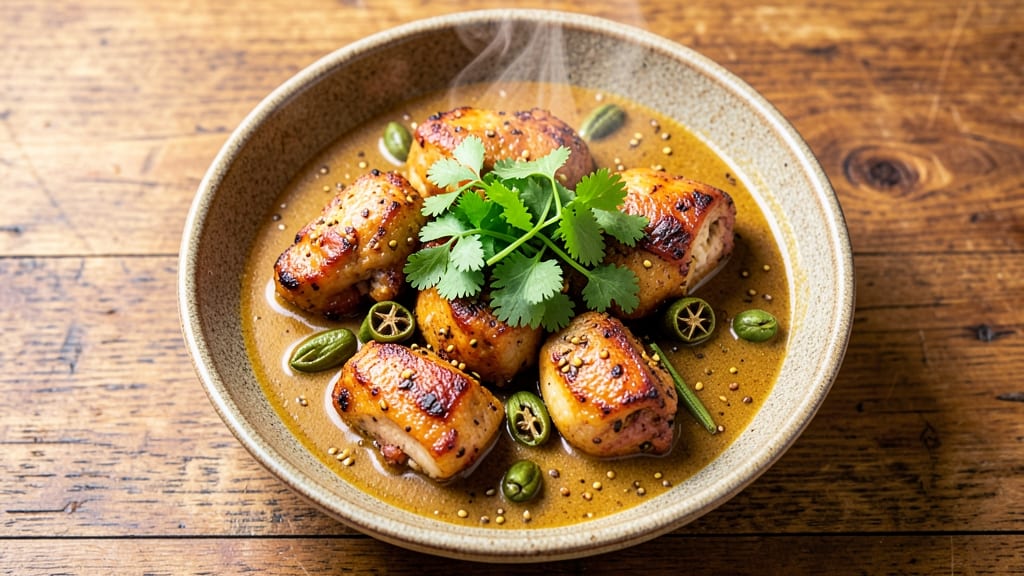
Aromatic chicken curry transforms simple ingredients into a restaurant-quality dish with layers of warm spices and tender meat. The secret lies in blooming whole spices—cumin, coriander, and cardamom—in hot oil until their aromas fill your kitchen, creating a fragrant foundation that defines the curry’s soul.
This one-pot method delivers deep flavor without complicated techniques, making it perfect for weeknights or special gatherings.
Start with a dry marinade of turmeric and yogurt to tenderize the chicken while keeping it juicy. Then, the spices take center stage: toasted cumin and mustard seeds release their nutty depth, while ginger and garlic infuse the oil with bright, pungent warmth.
A splash of coconut milk at the end ensures the sauce is velvety without overpowering the spices.
By the time you serve this curry, your kitchen will smell like a bustling Indian restaurant, and every bite will deliver perfectly balanced flavors—spicy yet sweet, aromatic yet comforting.
The chicken stays tender and flavorful, swimming in a sauce that’s rich but not heavy, with just the right amount of heat to linger.
Pair with steamed basmati rice or warm naan to soak up every last drop of that fragrant, spiced sauce. The recipe scales effortlessly, so it’s ideal for feeding a crowd or meal prepping for the week. Ready to create a curry that tastes like home?
Ingredients for aromatic chicken curry
Simple ingredients transform into aromatic chicken curry with layers of warm spices and tender meat.
| Ingredient | Amount | Notes |
|---|---|---|
| Boneless Chicken Thighs 🍗 | 1 ½ lb | Cut into 1-inch pieces |
| Plain Yogurt 🥛 | ½ cup | Full-fat preferred |
| Ground Turmeric 🌿 | 1 tsp | Fresh root preferred |
| Whole Cumin Seeds 🌶️ | 1 tbsp | Toasted until fragrant |
| Whole Coriander Seeds 🌿 | 1 tbsp | Toasted lightly |
| Green Cardamom Pods 🍃 | 6 whole | Lightly crushed |
| Mustard Seeds 🌶️ | 1 tbsp | Yellow or brown |
| Fresh Ginger 🧄 | ½ cup | Finely grated |
| Garlic Cloves 🧄 | 6 cloves | Minced finely |
| Extra-Virgin Olive Oil 🫒 | ½ cup | For blooming spices |
| Light Coconut Milk 🥥 | 1 can | 13.5 oz can |
| Tomato Paste 🍅 | 2 tbsp | Smooth consistency |
| Salt 🧂 | 1 ½ tsp | Adjust to taste |
| Ground Black Pepper 🌶️ | ½ tsp | Freshly ground |
| Cayenne Pepper 🔥 | ¼ tsp | Adjust for heat |
The spices are the heart of this curry, so buy whole spices if possible—they release more aroma when toasted. Penzeys or Indian grocery stores carry the best whole cumin, coriander, and cardamom. Toast them in a dry pan until fragrant (about 30 seconds)—that nutty aroma is what makes this dish sing. Fresh ginger and garlic are non-negotiable here; frozen works in a pinch, but fresh has that bright punch. For the chicken, thighs stay juicier than breasts during the long simmer, so stick with thighs unless you prefer drier meat.
No whole spices? Ground cumin and coriander work at half the amount, but you’ll miss that toasted depth. Running out of yogurt? Substitute coconut yogurt or even a splash of water with a pinch of lemon juice—it won’t be identical, but it’ll save you. The tomato paste can be skipped if you’re sensitive to acidity; just add an extra splash of coconut milk. For heat, red pepper flakes work in a 1:1 swap with cayenne. And if you’re short on time, pre-minced garlic (from a jar) is fine—just drain it well.
This curry tastes even better the next day, so make extra if you can. Store in an airtight container in the fridge for 4-5 days or freeze for 3 months. The sauce thickens as it cools, so add a splash of water or coconut milk when reheating. Serve with basmati rice or naan to soak up every last drop of that fragrant, spiced sauce—leftovers reheat beautifully, making this a perfect meal-prep friendly dish.
Why You'll Love This Recipe
- Minimal Chopping Required: I swear by this—just dice the chicken and toast the whole spices in the same pot. No fancy prep, no small cuts, no stress. The cumin and coriander seeds release their magic while you slice an onion in half (yes, really).
- Yogurt Keeps It Creamy: That plain yogurt isn’t just there to look pretty—it tenderizes the chicken and gives the curry that velvety finish without heavy cream. Between us, it’s the secret to a sauce that doesn’t separate or taste greasy. (My husband still asks where I learned that trick.)
- Weeknight to Weekend: Same recipe feeds my exhausted self on Tuesdays or impresses guests on Sundays. Serve it with naan for a casual dinner, or pile it over rice for a proper meal. Honestly, I’ve even frozen leftovers—thawed perfectly fine, no texture loss.
- Budget-Friendly Magic: Chicken thighs stretch farther than breasts, and spices cost pennies. A single batch feeds four, and the leftovers? Just as good reheated. I’ll be real: this is my go-to when I’m broke or busy—or both. (Which is often.)
Step-by-step instructions for aromatic chicken curry
Here's how to build layers of warm spice and rich flavor in a single pot.
Marinate the Chicken for Maximum Flavor
In a large bowl, combine the 1.5 lb boneless chicken thighs, cut into 1-inch pieces, with the 0.5 cup plain yogurt. Add 1 tsp ground turmeric, 1.5 tsp salt, and 0.5 tsp ground black pepper. Mix gently but thoroughly until every piece of chicken is evenly coated. The yogurt helps tenderize the meat while the turmeric adds that signature golden hue and earthy warmth.
Cover the bowl and refrigerate for at least 30 minutes—this allows the marinade to penetrate the chicken, ensuring deep flavor infusion. For best results, let it marinate for up to 2 hours. The longer it sits, the more tender and aromatic the chicken will become.
Bloom the Whole Spices in Olive Oil
In a heavy-bottomed pot, heat the 0.5 cup extra-virgin olive oil over medium heat. Add the 1 tbsp whole cumin seeds and 1 tbsp whole coriander seeds, stirring constantly. Watch closely—they should sizzle and begin to pop within 30 seconds. This is called "blooming" the spices, which releases their essential oils and intensifies their flavor.
Once the seeds are fragrant and lightly toasted (about 1 minute), add the 6 whole green cardamom pods and 1 tbsp mustard seeds. Stir for another 30 seconds until the mustard seeds begin to dance and pop. Remove the pot from heat immediately—overcooking can make the spices bitter. This aromatic base is the foundation of your curry, so don't rush this step.
Sauté Aromatics Until Fragrant
Return the pot to medium heat and add the 0.5 cup finely grated fresh ginger and 6 cloves minced garlic. Sauté for 2-3 minutes, stirring frequently, until the mixture becomes fragrant and the raw garlic smell disappears. This ensures the ginger and garlic are fully incorporated and their flavors are released.
Next, add the 2 tbsp tomato paste and stir for 1 minute until it darkens slightly. This step deepens the sauce's richness and balances the spices. If the mixture sticks, add a splash of water—but don't over-dilute. The tomato paste should coat the back of a spoon with a thick, glossy consistency.
Cook the Chicken and Build the Sauce
Add the marinated chicken to the pot, spreading it evenly. Increase heat to medium-high and cook for 5-6 minutes, stirring occasionally, until the chicken is no longer pink on the outside. This ensures the meat is fully sealed and won't dry out during the long simmer.
Pour in the 1 can light coconut milk, reduce heat to low, and stir gently to combine. The coconut milk should just cover the chicken. Sprinkle with 0.25 tsp cayenne pepper for a subtle heat. Partially cover the pot and let it simmer for 25-30 minutes, stirring occasionally, until the chicken is tender and the sauce has thickened slightly. The curry should have a velvety texture with a rich, aromatic aroma.
Adjust Consistency and Serve
Once the chicken is fully cooked, taste the curry and adjust seasoning if needed. If the sauce is too thick, add 2-3 tablespoons of water and simmer for another 2-3 minutes. If it's too thin, simmer uncovered for 5 minutes to reduce it to your desired consistency.
Serve the curry hot, garnished with fresh cilantro if desired. Each bite should deliver tender chicken infused with warm spices, a creamy coconut base, and a balanced blend of earthy and tangy flavors. Pair it with steamed basmati rice or warm naan bread for the full experience.
Pro Tips For Making Aromatic Chicken Curry
- CRACK THE SPICES FIRST: Toast your whole cumin and coriander seeds in a dry pan for exactly 30 seconds—just until they smell like a spice market. Overdoing it burns them into bitter ashes, and underdoing it leaves them raw and beany. (Yes, even if you're impatient like me, wait for that aroma to hit.)
- MARINATE THE CHICKEN LONGER: Let the yogurt-turmeric mix sit on the chicken for at least 2 hours—or overnight if you can. I used to rush this, thinking it was unnecessary, but the curry tastes dull without that time for the spices to penetrate. (Pro tip: Cover and refrigerate it.)
- LOW AND SLOW AFTER SEARING: Once the chicken browns, drop the heat to medium-low and cover the pot. Too much heat too soon turns the yogurt into a skin, and the curry ends up grainy. Let it simmer gently—this is where the real flavor develops.
- USE FULL-FAT YOGURT: Skip the non-fat version—it splits and curdles under heat, making the curry look and taste unappealing. Full-fat yogurt stays creamy and adds richness. (If you're in a pinch, mix in a splash of coconut milk at the end, but it’s not the same.)
Storing and reheating this dish
Fridge Storage Tips
Let your aromatic chicken curry cool completely before transferring to an airtight container—glass is best for reheating. Store in the fridge for up to 4-5 days, but I always make extra because it tastes even better the next day. The spices meld beautifully overnight, deepening the flavor profile. Just
Freezer-Friendly Method
For longer storage, freeze portions in quart-sized freezer bags—they stack neatly and thaw faster than containers. Portion into single-serving bags for easy grab-and-go meals. Press out excess air and seal tightly to prevent freezer burn. This curry stays delicious for up to 3 months in the freezer, though I recommend eating it within 2 months for peak texture and flavor. Label with the date to track freshness.
Stovetop Reheating
My preferred method is stovetop reheating—it preserves the sauce's velvety texture. Place the curry in a pot over medium-low heat and add 2-3 tablespoons of water or coconut milk to loosen the sauce. Stir frequently for 8-10 minutes until heated through (165°F internal temperature).
If the sauce thickens too much, add another splash of liquid. Taste and adjust salt or cayenne pepper as needed—reheated curry often needs a pinch more salt. 🔥
Microwave Shortcuts
For quick reheating, transfer curry to a microwave-safe dish and cover loosely with a microwave-safe lid. Heat on high for 2-3 minutes, stirring halfway, until hot. If the sauce seems dry, add 1-2 tablespoons of water or coconut milk and stir well.
Avoid overcooking—microwaving can make the sauce watery if not monitored. I usually reheat just until steaming, then let it sit for 1 minute before serving to redistribute flavors.
Sauce Consistency Fixes
The sauce naturally thickens when cooled or reheated. If it's too thick after reheating, thin with 1-2 tablespoons of warm water or coconut milk. For extra richness, stir in 1 teaspoon of yogurt before serving.
If the curry tastes bland after reheating, boost flavor with a squeeze of lemon juice or a sprinkle of garam masala. The key is to adjust gradually—taste as you go! ✨
Nutrition facts
Frequently asked questions
Why do we bloom whole spices instead of using ground spices?
Blooming whole spices releases their essential oils and intensifies their aroma by 30-50% compared to ground spices. When you toast cumin, coriander, and cardamom in oil, they pop and sizzle, creating a fragrant base that defines the curry's soul. Ground spices lose flavor quickly when heated directly, while whole spices develop deeper, more complex notes. This technique is key to that restaurant-quality aroma!
Can I substitute coconut milk with another dairy product?
While coconut milk is traditional, you can use 1 cup heavy cream or ½ cup Greek yogurt plus ½ cup water for a lighter texture. However, coconut milk adds natural sweetness and creaminess that balances the spices perfectly. For a vegan option, try ½ cup cashew cream (blended soaked cashews) mixed with ½ cup water. Just reduce simmering time by 5 minutes—dairy alternatives thicken faster.
What's the best way to adjust the heat level?
Start with the ¼ tsp cayenne pepper as written, then taste before serving. For milder heat, reduce to ⅛ tsp or omit completely. If you love spice, add ½ tsp red pepper flakes or a pinch of fresh chili powder. Pro tip: Add heat at the end—this lets you control the final spice level perfectly without overpowering the aromatic spices during cooking.
How do I prevent the chicken from drying out?
Marinating for at least 30 minutes (up to 2 hours) keeps the chicken juicy. Use thighs instead of breasts—they stay moist during long simmering. After adding coconut milk, keep heat at low and cover partially to trap steam. If the sauce reduces too quickly, add 2 tbsp water and simmer uncovered for 5 minutes to adjust consistency without drying the chicken.
Can I make this curry in an Instant Pot?
Yes! Sauté spices in ½ cup oil on "Sauté" for 2 minutes, then add chicken and cook 2 minutes more. Add remaining ingredients, seal the lid, and cook on High Pressure for 8 minutes. Quick-release pressure, then adjust sauce consistency. The Instant Pot version cooks 40% faster but requires 10% more liquid to prevent sticking. Stir in 1 tbsp yogurt at the end for extra creaminess.