
Main Courses
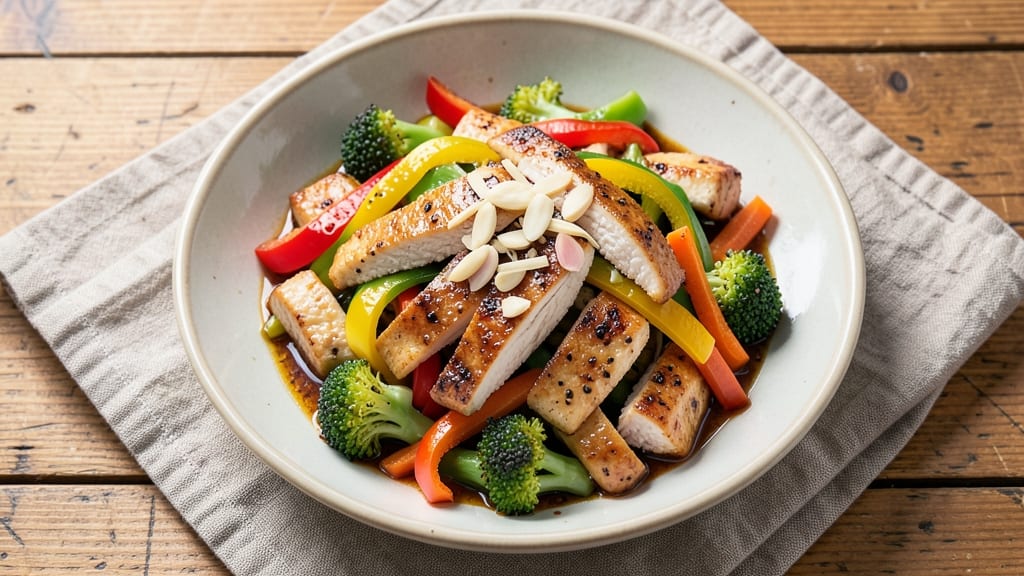
This Asian chicken stir-fry recipe delivers restaurant-quality wok-heated flavors in just 20 minutes, balancing tender chicken, crisp vegetables, and layers of umami through traditional techniques. The secret lies in high-heat cooking and proper prep—cutting vegetables uniformly and marinating the chicken briefly to lock in juiciness. This isn’t just a quick weeknight meal; it’s a flavor-packed dish that transforms simple ingredients into something extraordinary.
What makes this recipe stand out is its perfect harmony of textures and flavors—crisp-tender chicken, vibrant vegetables, and a glossy sauce that coats every bite. We’ll use a classic combination of soy sauce, oyster sauce, and sesame oil for depth, while garlic and ginger provide that signature aromatic punch.
The key to achieving wok hei (breath of the wok) lies in a screaming-hot wok or skillet, where the chicken and vegetables sear quickly, releasing natural sugars that caramelize into a delicious crust.
By the end, you’ll have a dish that’s as visually appealing as it is delicious—golden chicken, bright vegetables, and a sauce that glistens under the light. The plating is simple yet elegant: a bed of steamed rice topped with the stir-fry, garnished with sesame seeds and sliced green onions.
This recipe is designed to impress, whether you’re cooking for family or hosting dinner guests.
Best of all, it’s incredibly adaptable. Swap in your favorite vegetables, adjust the spice level, or even make it gluten-free with tamari. Let’s get started on creating a stir-fry that tastes like it came straight from your favorite Asian bistro.
Ingredients for asian chicken stir fry recipe with vegetables
Here's what you need to create this restaurant-quality stir-fry with bold Asian flavors and perfect wok-hei texture.
| Ingredient | Amount | Notes |
|---|---|---|
| Boneless Skinless Chicken Breast 🍗 | 1 ½ lb | Cut into 1-inch strips |
| Medium Carrots 🥕 | 3 whole | Julienned into matchsticks |
| Bell Peppers (Assorted Colors) 🍅 | 2 whole | Cut into thin strips |
| Broccoli Florets 🥦 | 2 cups | Cut into bite-sized pieces |
| Garlic Cloves 🧄 | 4 cloves | Minced finely |
| Fresh Ginger 🌿 | 1 tbsp | Grated finely |
| Soy Sauce 🥢 | ⅓ cup | Low-sodium preferred |
| Oyster Sauce 🍜 | 2 tbsp | For authentic umami |
| Sesame Oil 🫒 | 1 tbsp | Toasted for aroma |
| Cornstarch 🌾 | 1 tbsp | For tenderizing chicken |
| Vegetable Oil 🫒 | ½ cup | High smoke point |
| Sesame Seeds 🌱 | 1 tbsp | For garnish |
| Green Onions 🧅 | 3 whole | Sliced thinly |
| White Rice 🍚 | 2 cups | Uncooked, long grain |
| Salt 🧂 | 1 tsp | Kosher or sea salt |
The chicken is your foundation—boneless, skinless breasts cut into even strips cook faster and stay juicier. Costco or Trader Joe's sell pre-cut packages, but if you're buying whole breasts, slice against the grain for tenderness. The vegetables should be uniformly sized—no giant broccoli crowns or thick carrot chunks. Julienne peppers and carrots while the wok heats up to save time. Fresh ginger and garlic? Don't skimp—these are the aromatic stars. Grab a microplane for ginger to avoid stringy bits. For the sauce, Lee Kum Kee oyster sauce is my go-to, but any quality brand works.
No soy sauce? Coconut aminos works in a pinch, though the flavor will differ slightly. Short on sesame oil? Swap for toasted peanut oil—same smoky depth. The cornstarch is non-negotiable for that signature tender texture—don't skip it. Vegetable oil handles the high heat better than olive oil, which can burn. For extra crunch, blanch your broccoli 30 seconds first. The green onions? White parts only for cooking, save the greens for garnish. And if you're gluten-free, tamari replaces soy sauce perfectly—just check the label for cross-contamination warnings.
Prep everything before you start cooking—mise en place is key here. The rice can cook while you stir-fry, but start it 10 minutes early so it's ready when the chicken is done. Store leftover stir-fry in airtight containers for 3-4 days, or freeze for up to 3 months. Reheat gently in a skillet with a splash of water to restore crispiness. Double the sauce if you're making extra—it freezes beautifully. And trust me, leftovers taste even better the next day as the flavors meld.
Why You'll Love This Recipe
- One-Pan Magic: I swear by this recipe when I’m too tired to scrub pots—just toss everything on one sheet pan, toss with sauce, and walk away. The chicken stays juicy while the veggies caramelize right alongside it, no flipping or fussing required.
- Garlic Kiss: That moment when you press the minced garlic into the chicken? Chef’s kiss. It infuses the meat with a fragrant depth that turns simple breast into something irresistible—no fancy marinade, just pure flavor payoff.
- Lunchbox Hero: Between us, this is my go-to for meal prep. The broccoli stays crisp, the peppers hold their color, and the sauce clings to everything like it’s glued on. Pack it cold or reheat it—either way, my kids (and my coworkers) devour it.
- Budget Win: Chicken breast, carrots, and bell peppers? That’s a grocery list that won’t break the bank. I stretch a single batch into three lunches or two dinners, and the leftovers? Just as good the second time around—no sad, dry stir-fry here.
Step-by-step instructions for Asian chicken stir fry with vegetables
Here's how to create a restaurant-quality stir fry with perfectly tender chicken and vibrant vegetables.
Prepare the Chicken and Vegetables
Start by cutting the 1.5 lb boneless skinless chicken breast into 1-inch strips. Place them in a bowl and mix with 1 tablespoon cornstarch and 1 teaspoon salt. Toss gently to coat evenly - this creates a light crust that prevents dryness during cooking. Let the chicken marinate for 10 minutes while you prep the vegetables.
Julienne the 3 whole medium carrots into matchsticks, cut the 2 whole bell peppers into thin strips, and chop the 2 cups broccoli florets into bite-sized pieces. Finely mince the 4 cloves garlic and grate the 1 tablespoon fresh ginger. Keep all prepped ingredients in separate bowls until ready to use - this keeps everything fresh and prevents soggy vegetables.
Cook the Chicken Until Fully Done
Heat 0.5 cup vegetable oil in a large wok or skillet over high heat until shimmering. Add the chicken strips in a single layer and cook undisturbed for 2-3 minutes until the edges turn golden brown. Here's the thing - don't overcrowd the pan or the chicken will steam instead of sear. If needed, cook in batches to maintain high heat.
Once the chicken is 80% cooked (it should still have slight pink in the center), remove it from the wok and set aside. The residual heat will finish cooking it when combined with the vegetables. Keep the wok on high heat - we'll use that same oil for the vegetables.
Stir-Fry the Vegetables to Crisp-Tender Perfection
Add the julienned carrots, bell pepper strips, and broccoli florets to the hot wok. Stir-fry vigorously for 3-4 minutes until the vegetables are bright green and slightly crisp - you want them to retain their texture rather than turn mushy. The high heat should create a satisfying sizzle as they cook.
Add the minced garlic and grated ginger, stirring for 30 seconds until fragrant. This is where the real flavor develops - the garlic should turn golden without burning. Here's a pro tip: work quickly but don't rush. The vegetables should be cooked through but still have a pleasant bite.
Combine and Create the Sauce
Return the chicken to the wok and pour in the 0.33 cup soy sauce and 2 tablespoons oyster sauce. Stir everything together for 1-2 minutes until the chicken is fully heated through and coated in the sauce. The vegetables should be tender-crisp with just a hint of resistance when bitten.
Drizzle in the 1 tablespoon sesame oil and toss everything together. The sesame oil adds that authentic Asian aroma and helps distribute the sauce evenly. Taste and adjust seasoning if needed - you might want to add a pinch more salt or a splash of water to loosen the sauce slightly.
Finish and Serve Immediately
Remove the stir fry from heat and transfer to a serving platter. Garnish with 1 tablespoon toasted sesame seeds and 3 whole green onions sliced thinly. Serve immediately over 2 cups cooked white rice - the rice should be hot and slightly sticky to soak up all that delicious sauce.
This stir fry is best served fresh while the vegetables are still crisp and the chicken is juicy. The flavors will meld beautifully as you eat, with each bite delivering a perfect balance of umami from the sauces, sweetness from the bell peppers, and freshness from the vegetables. Enjoy your homemade Asian-inspired meal!
Pro Tips For Making Asian Chicken Stir Fry Recipe With Vegetables
- CUT CHICKEN IN HALF LENGTHWISE: I learned this the hard way—whole chicken breasts stay dense and dry no matter how long you cook them. Slice each breast into two thinner cutlets (about ½-inch thick) so the heat penetrates faster and you avoid rubbery texture. The edges will brown beautifully while the center stays juicy.
- SALT CHICKEN IMMEDIATELY: Don’t wait until the pan is hot—season the chicken with ½ teaspoon salt per breast right after cutting. Let it sit for 5 minutes while you prep veggies. This guarantees better flavor absorption and prevents blandness, especially if your stir-fry sauce is light.
- STIR-FRY IN BATCHES: Your pan will steam instead of sear if you crowd it. Cook the chicken first in a single layer, then remove it before adding veggies. Start with the hardest veggies (carrots, broccoli) first—they need 2–3 minutes longer than peppers to soften. Overcrowding turns stir-fry into soup.
- USE COLD VEGETABLES: Fresh-from-the-fridge veggies release less moisture when they hit the hot pan, so they crisp up instead of turning soggy. Toss the chopped peppers, carrots, and broccoli in ice water for 30 seconds before draining—this trick keeps them vibrant and prevents a mushy texture. (Yes, even if you’re impatient like me.)
Best sauces and condiments for these flavors
Classic Soy-Ginger Sauce
This foundational sauce delivers the perfect umami balance—start with ⅓ cup low-sodium soy sauce, 2 tbsp Lee Kum Kee oyster sauce, 1 tbsp toasted sesame oil, 1 tbsp honey, and 1 tsp grated ginger.
Simmer for 2 minutes to meld flavors, then finish with ½ tsp white pepper for depth. I like to reduce it slightly for a glossy coat—just enough to cling to the chicken and veggies without overwhelming them. 🥢
Spicy Chili-Lime Twist
For heat lovers, swap the classic sauce for a zesty blend: ⅓ cup tamari, 2 tbsp rice vinegar, 1 tbsp gochujang, 1 tsp lime zest, and ½ tsp chili crisp. Toss the stir-fry in this sauce for 1 minute before serving.
The lime brightens the dish, while the gochujang adds a fermented depth that pairs perfectly with the smoky chicken. Garnish with extra lime wedges for tangy contrast. 🌶️
Peanut Sesame Glaze
Creamy and nutty, this sauce transforms your stir-fry into a Thai-inspired dish. Blend ¼ cup smooth peanut butter, 2 tbsp soy sauce, 1 tbsp rice vinegar, 1 tbsp brown sugar, 1 tsp grated ginger, and ½ tsp garlic powder until smooth.
Thin with 1-2 tbsp warm water if needed. Drizzle over the stir-fry and toss with 1 tbsp crushed peanuts and cilantro for texture. The peanut butter adds richness, while the vinegar cuts through the fat. 🥜
Sweet and Sour Glaze
Balance the savory flavors with a tangy-sweet sauce: mix ⅓ cup hoisin sauce, 2 tbsp rice vinegar, 1 tbsp honey, 1 tsp cornstarch (to thicken), and ½ tsp sesame oil. Simmer until slightly thickened, then toss with the stir-fry.
The hoisin adds a molasses-like sweetness, while the vinegar keeps it bright. Serve with extra red onion slices for crunch and a splash of vinegar on the side for dipping. 🍯
Umami Mushroom Sauce
For a deeper, earthier flavor, sauté ½ cup sliced shiitake mushrooms in 1 tbsp sesame oil until golden, then deglaze with ⅓ cup soy sauce and 1 tbsp Shaoxing wine. Add 1 tsp sugar and ½ tsp white pepper to balance.
The mushrooms add a meaty texture and rich umami that elevates the dish—especially if you’re serving it as a main course. 🍄
Quick Garlic-Chili Oil
For a fast, flavor-packed drizzle, heat 2 tbsp neutral oil with 3 minced garlic cloves and 1 tsp red pepper flakes until fragrant (30 seconds). Pour over the finished stir-fry and toss.
The garlic infuses the oil with aroma, while the chili adds a subtle kick. This works as a finishing touch for any sauce or as a standalone condiment for dipping. 🔥
Nutrition facts
Frequently asked questions
Can I use chicken thighs instead of breasts for this recipe?
Yes! Chicken thighs actually work beautifully—they stay juicier and more flavorful during high-heat cooking. Use 1.5 lb bone-in, skin-on thighs and cut them into 1-inch pieces. Skip the cornstarch coating since thighs don't need it, but pat them dry first for better browning. Cook them for 4-5 minutes until golden and internal temp reaches 165°F. The skin adds delicious crispiness too!
What vegetables can I substitute if I don't have bell peppers or broccoli?
This stir-fry is flexible! Swap bell peppers for snap peas, zucchini, or mushrooms (they add umami). Replace broccoli with green beans, bok choy, or snap peas. For extra crunch, add water chestnuts or jicama—they hold up well to stir-frying. Just cut everything to similar sizes so they cook evenly.
How do I prevent the chicken from drying out in stir-fry?
The cornstarch coating is key—it creates a protective barrier that locks in moisture. Always use high heat and cook chicken in single layers (don't overcrowd). For extra insurance, marinate the chicken for 20-30 minutes in 1 tbsp soy sauce + 1 tsp honey before cooking. And remember: undercook slightly—it'll finish cooking when combined with hot vegetables.
Can I make this recipe gluten-free?
Replace soy sauce with tamari or coconut aminos (both gluten-free). Check oyster sauce labels—most contain wheat, so use a gluten-free alternative like vegan oyster sauce (made from mushrooms). For extra umami, add 1 tbsp gluten-free fish sauce or ½ cup mushroom broth to the sauce. The flavor will still be rich and satisfying!
Why does my stir-fry sauce turn watery when I add it?
This happens when the sauce is too thin or the vegetables release too much moisture. Fix it by adding ½ tsp cornstarch mixed with 1 tsp water to thicken, or let the stir-fry cook 1-2 minutes longer to evaporate excess liquid. For prevention, always cook vegetables until just tender-crisp before adding sauce. If using watery veggies (like zucchini), salt them first and let sit 10 minutes to draw out moisture.