
Main Courses
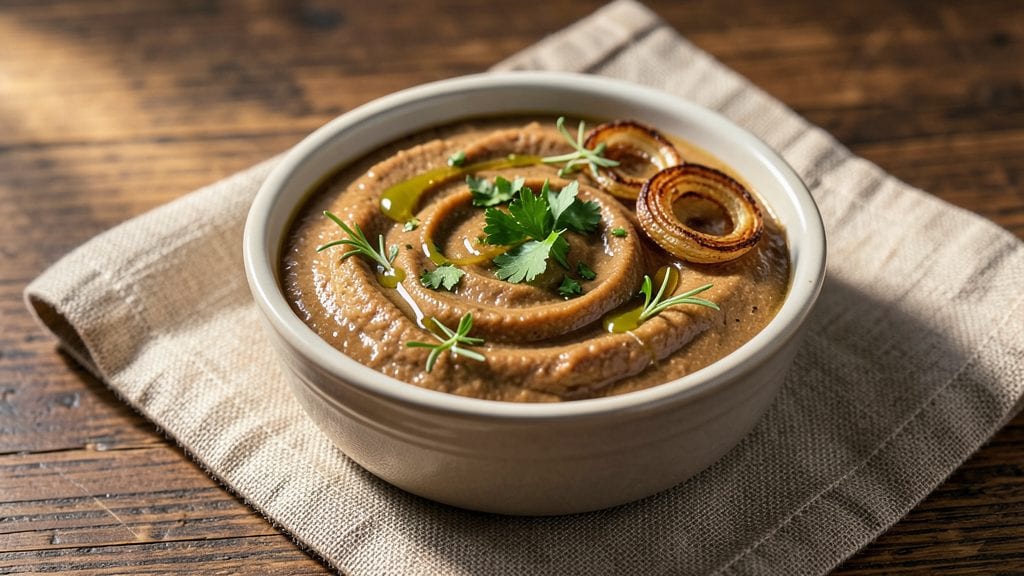
Mastering a basic chicken liver pâté recipe transforms humble offal into a velvety, restaurant-worthy spread that’s rich, smooth, and packed with umami depth.
Growing up in Georgia, I learned how liver pâté elevates holiday tables—its texture is pure indulgence, and the celery crown adds a satisfying crunch that balances the richness.
This recipe delivers both classic terrine technique and a spreadable version, so you can serve it in elegant molds or straight from the jar.
The foundation of great pâté lies in proper liver preparation: cleaning, blanching, and browning before blending with fat and seasonings. I use a mix of butter and duck fat for that signature melt-in-your-mouth finish, while a touch of brandy or Madeira adds complexity.
The key is patience—cooking the livers low and slow ensures they break down into silky perfection without turning greasy. For the celery crown, thinly sliced celery is quickly fried until crisp, then layered on top for that signature crunch.
What you’ll end up with is a pâté that’s velvety smooth, deeply flavorful, and ready to impress—whether served on toasted baguette slices, stuffed into puff pastry, or spread directly from the jar.
The aroma alone will draw guests to the table, and every bite delivers that perfect harmony of liver richness and crisp celery contrast. This is the kind of dish that turns weeknight dinners into memorable occasions.
For those who love tradition, this recipe includes both terrine and spreadable methods, with tips for storage and reheating. Whether you’re hosting a holiday feast or simply craving something luxurious, this pâté delivers professional results with just a few simple steps. Let’s get started—your taste buds will thank you.
Ingredients for basic chicken liver pate
Sixteen ingredients transform humble chicken livers into a luxurious pâté with perfect texture and crunch.
| Ingredient | Amount | Notes |
|---|---|---|
| Chicken Livers 🍗 | 1 ½ lb | Fresh, cleaned and trimmed |
| Unsalted Butter 🧈 | ½ cup | Cold, cubed for browning |
| Duck Fat 🦆 | ¼ cup | Rendered, for richness |
| Shallots 🧅 | ¼ cup | Finely chopped, fresh preferred |
| Garlic Cloves 🧄 | 4 cloves | Minced, fresh recommended |
| Brandy 🍷 | 2 tbsp | Or Madeira wine substitute |
| Heavy Cream 🥛 | ½ cup | Full-fat for creaminess |
| Fresh Parsley 🌿 | ¼ cup | Chopped, for freshness |
| Celery Stalks 🥬 | 2 whole | Thinly sliced for crown |
| Olive Oil 🫒 | 2 tbsp | For celery frying |
| Salt 🧂 | 1 tsp | Kosher or sea salt |
| Black Pepper 🌶️ | ½ tsp | Freshly ground preferred |
| Nutmeg 🌿 | ¼ tsp | Freshly grated for warmth |
| Baguette 🍞 | 1 whole | For serving, sliced and toasted |
The livers are the star, so quality matters. Grab them from the butcher counter—they should be bright red, not grayish or slimy. Costco or Whole Foods often have pre-cleaned ones, but if you're doing it yourself, soak them in cold water for 10 minutes to remove any blood. The duck fat? Trader Joe's sells it pre-rendered, or you can render your own from duck confit. For the celery crown, look for crisp stalks with no brown spots—those get mushy when fried. Shallots add sweetness, so fresh is non-negotiable here; dried won't cut it.
No brandy? Madeira wine or even a splash of cognac works—just keep the amount the same. Short on duck fat? Extra butter or goose fat are solid swaps, but duck gives that signature depth. The celery crown can be skipped if you're in a rush, but trust me, that crispy top layer makes it feel like a restaurant dish. For the parsley, dried works at half the amount, but fresh adds that bright pop. If you're making this ahead, the pâté keeps beautifully, but the celery crown is best added fresh before serving—it loses crispness fast.
Pâté freezes like a dream—portion it into small jars or molds for easy serving later. 3 months in the freezer, no problem. For the celery crown, fry it just before adding to the pâté—it should take about 2 minutes in hot oil. If you're serving it straight from the jar, let it sit at room temp for 30 minutes before scooping. The butter and duck fat combo makes it rich, so a little goes a long way—2 tbsp per slice of baguette is plenty. Leftovers? Reheat gently in a water bath to keep it smooth.
Why You'll Love This Recipe
- No-Fuss Ingredient List: I swear by this recipe because it’s that simple—just livers, butter, duck fat, and aromatics. No fancy pantry staples, no last-minute grocery runs. Honestly, I keep a bag of livers in the freezer just for this.
- Rich Without Effort: That blend of duck fat and butter? Chef’s kiss. The fat renders down into pure silkiness while the shallots and garlic caramelize into something deeply savory. It’s the kind of flavor that makes you pause mid-bite—like a hug for your taste buds.
- Weeknight or Holiday: Between us, this pate is my go-to for dinner parties and lazy Sundays. Spread it on crusty bread for guests or slather it on toast for a 10-minute breakfast. My daughter even sneaks bites straight from the jar—(yes, even on a Tuesday night).
- Leftovers That Don’t Suck: Unlike most pâtés, this one actually improves after a day or two in the fridge. The flavors meld even deeper, and it’s still just as easy to serve. I make a double batch, freeze half, and thank myself later when I’m scrambling for a quick appetizer.
Step-by-step instructions for velvety chicken liver pâté
Here's how to transform rich chicken livers into a luxurious, velvety spread with perfect texture.
Prepare the Chicken Livers for Cooking
Start by cleaning the 1.5 lb chicken livers thoroughly under cold running water to remove any blood or impurities. Pat them completely dry with paper towels—this ensures they brown properly instead of steaming. Remove any connective tissue or silver skin using a small knife, as these can make the pâté tough.
Cut the cleaned livers into ¼-inch thick slices for even cooking. Place them in a bowl and season generously with 1 tsp salt and 0.5 tsp black pepper, tossing to coat. Let them sit at room temperature for 15 minutes before cooking. This step guarantees the livers cook uniformly and absorb the seasoning perfectly.
Sear the Livers Until Perfectly Browned
Heat a large skillet over medium-high heat and add 2 tbsp olive oil. Once the oil shimmers, add the seasoned livers in a single layer, leaving space between each piece. Cook undisturbed for 2-3 minutes per side until they develop a deep golden-brown crust—this is crucial for flavor and texture. Avoid overcrowding the pan, or the livers will steam instead of sear.
As the livers cook, add 0.25 cup finely chopped shallots and 4 cloves minced garlic to the same pan. Stir for 30 seconds until fragrant but not browned. Remove the livers with a slotted spoon and set aside on a paper towel-lined plate to drain excess fat. Keep the shallots and garlic in the pan for the next step.
Build the Rich Base with Butter and Duck Fat
Reduce the heat to medium-low and add 0.5 cup cubed unsalted butter and 0.25 cup duck fat to the skillet with the shallots and garlic. Melt the butter completely, stirring occasionally, until it foams and turns golden. This step creates a luxurious, flavorful base for your pâté.
Add 2 tbsp brandy to the pan and immediately scrape up any browned bits from the bottom—this deglazes the pan and captures all the flavor. Let the brandy simmer for 1-2 minutes until it reduces by half. Stir in 0.25 tsp freshly grated nutmeg and let it warm through for 30 seconds to infuse the aroma.
Blend Until Silky Smooth
Transfer the browned livers to a food processor or blender. Add the shallot-garlic mixture from the pan, along with 0.5 cup heavy cream and 0.25 cup chopped fresh parsley. Pulse until the mixture is smooth but still slightly textured—this ensures a velvety finish without over-processing.
With the food processor running, slowly drizzle in the melted butter and duck fat mixture from the pan. This gradual addition prevents the pâté from becoming greasy while maintaining its rich, luxurious mouthfeel. Taste and adjust seasoning with additional salt or pepper if needed.
Prepare the Celery Crown and Serve
Slice the 2 whole celery stalks into ¼-inch thick rounds and separate them into individual rings. Heat 2 tbsp olive oil in a small skillet over medium heat until shimmering. Fry the celery rings in batches for 1-2 minutes per side until golden brown and crisp. Drain on paper towels and sprinkle with a pinch of salt.
Transfer the pâté to a serving bowl and top with the crispy celery crown. Serve immediately with slices of 1 whole baguette for dipping. The contrast of the velvety pâté with the crispy celery crown creates a perfect balance of textures in every bite.
Pro Tips For Making Basic Chicken Liver Pate
- Trim the Gall Bladders: DESCRIPTION: Chicken livers hide tiny green sacs (gall bladders) that turn bitter if left in—pop them out with your fingers or a knife. I learned this the hard way after serving a batch that tasted like soap. It’s a 30-second step that saves your pate from disaster.
- Sear in Batches: DESCRIPTION: Don’t crowd the pan—cook livers in single layers over medium-high heat for 1-2 minutes per side until deeply browned. I used to rush this, and the result was gray, undercooked livers that never melted into a velvety pate. High heat first, then finish low.
- Sweat Shallots Slowly: DESCRIPTION: Cook shallots in duck fat on low heat until they’re translucent and just starting to caramelize—about 8-10 minutes. Rushing this step means they’ll burn before the livers are done, and burnt shallots ruin the whole dish. Patience here pays off.
- Chill Before Blending: DESCRIPTION: Let the cooked livers and aromatics cool to room temp (10-15 minutes) before blending with butter and fat. I skipped this once and ended up with a greasy, grainy mess—warm fat separates, and cold ingredients emulsify better. Yes, it’s an extra wait, but it’s worth it.
Best sauces and condiments for this recipe
Classic Mustard Glaze
Elevate your pâté with a Dijon mustard glaze—just whisk 1 tbsp Dijon mustard, 1 tbsp honey, and 1 tsp apple cider vinegar until smooth. Drizzle over the pâté just before serving to add a tangy brightness that cuts through the richness.
I like to warm the glaze gently over low heat for 2 minutes to meld the flavors. 🍯
Spiced Red Wine Reduction
For a sophisticated touch, simmer ½ cup red wine (like a bold Cabernet Sauvignon), 1 tsp thyme, and ½ tsp cinnamon in a saucepan until reduced by half. Strain and drizzle over the pâté before adding the celery crown.
This adds depth and pairs beautifully with the liver’s natural umami. I often use this for holiday gatherings—it feels extra special. 🍷
Honey-Soy Drizzle
A honey-soy glaze adds a touch of sweetness that balances the pâté’s richness. Combine 2 tbsp soy sauce, 1 tbsp honey, and 1 tsp grated ginger in a small saucepan.
Simmer for 3-4 minutes until slightly thickened. Drizzle lightly over the top or use it to glaze the celery crown before frying for extra flavor. 🍯
Herb-Infused Olive Oil
For a lighter but still flavorful option, infuse ½ cup high-quality olive oil with 2 tbsp chopped fresh tarragon, 1 tbsp chopped chives, and 1 clove garlic. Heat gently for 5 minutes to release the aromas, then strain and drizzle over the pâté.
This adds a fresh, herbaceous note that keeps the dish from feeling too heavy. 🌿
Smoked Paprika Crème Fraîche
Mix ¼ cup crème fraîche with ½ tsp smoked paprika and a pinch of salt for a creamy, smoky topping. Spread a dollop on top of the pâté or use it to swirl into the spreadable version before serving.
This adds a cool contrast to the warm pâté and works especially well with the celery crown. 🌶️
Balsamic Caramelized Onions
Caramelize ½ cup thinly sliced onions in 1 tbsp butter until golden, then deglaze with 1 tbsp balsamic vinegar and reduce by half. Spoon the onions over the pâté for a sweet-savory topping that adds texture and complexity.
I often do this when serving pâté with crusty bread—it’s a crowd-pleaser. 🧅
Nutrition facts
Frequently asked questions
Can I substitute duck livers for chicken livers in this recipe?
Yes, but expect richer flavor and slightly firmer texture. Duck livers have more fat and require less cooking time—reduce searing to 1-2 minutes per side to avoid overcooking. Adjust the duck fat to 0.5 cup and reduce butter to 0.25 cup to balance the richness. The celery crown still works perfectly with duck liver pâté.
How do I fix pâté that turned out too greasy?
If your pâté is too oily, chill it completely in the fridge for 1 hour first. The fat will rise to the top—spoon it off carefully. For extra insurance, blend in 1 tbsp cornstarch or 1 egg yolk to help bind the mixture. Reheat gently in a water bath to restore smoothness.
Can I make this ahead of time for a holiday gathering?
The pâté keeps beautifully for 3 days in the fridge or 3 months frozen. Make it 24 hours ahead for best flavor development. Reheat gently in a water bath to maintain texture. The celery crown should be added fresh before serving—it loses crispness quickly after frying.
What's the difference between terrine and spreadable pâté?
The terrine version uses a mold and cooks longer (1 hour at 350°F), creating a firm texture perfect for slicing. For spreadable, blend until smooth and serve immediately or chill briefly. The recipe here is designed for both—just omit the baking step for the spreadable version.
Why did my celery crown turn out soggy?
Celery crowns lose crispness when fried too long or added to warm pâté. Fry in batches for 1-2 minutes per side until golden, then drain on paper towels. Add to the pâté just before serving to maintain crispness. If using leftovers, fry fresh celery crowns when reheating.