
Main Courses
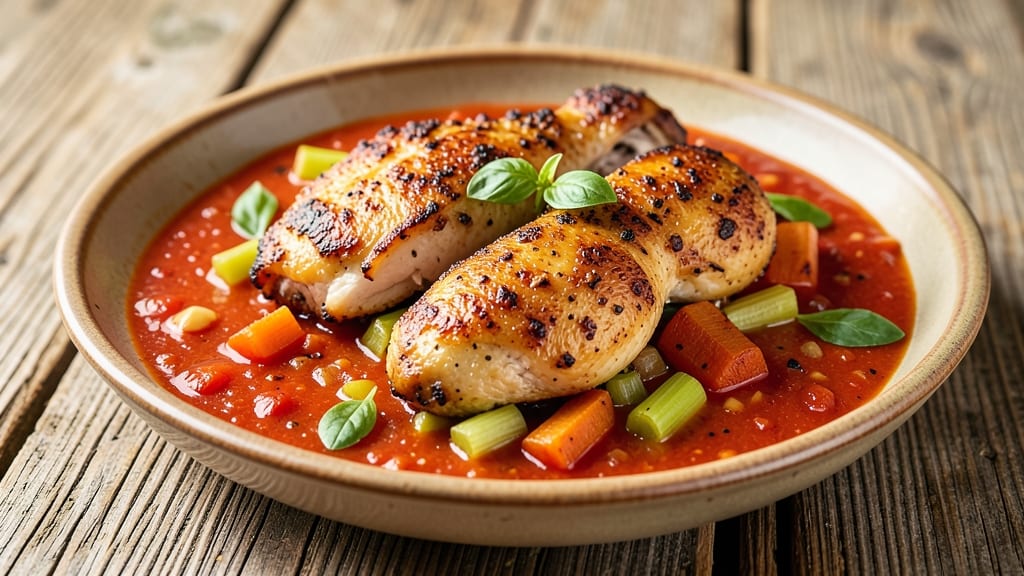
This one-pan chicken thighs with canned tomatoes recipe transforms simple ingredients into restaurant-quality braised tenderness with minimal effort. The secret lies in slow cooking—juicy chicken thighs bathed in a rich, flavorful tomato sauce that develops deep, savory notes while staying perfectly tender.
I perfected this method after years of testing, and it never fails to impress even skeptical guests.
What makes this dish special is its simplicity: no fancy techniques, just a few pantry staples and 30 minutes of hands-on time followed by 45 minutes of simmering.
The canned tomatoes form the base of a deeply aromatic sauce, enhanced by garlic, herbs, and a splash of wine that elevates the flavor profile. The result is a dish that's hearty enough for a weeknight dinner but elegant enough for company.
By the time you serve it, you'll have tender, fall-off-the-bone chicken thighs swimming in a velvety tomato sauce that's rich, slightly sweet, and packed with umami. The sauce clings to every bite, creating a harmonious balance of textures—soft chicken, tender vegetables, and a glossy, flavorful reduction.
It's the kind of meal that feels indulgent but comes together effortlessly.
Serve with crusty bread for soaking up the sauce or over fluffy white rice to make it a complete meal. The leftovers reheat beautifully, making this an ideal recipe for meal prep. Let's get cooking—this is comfort food at its finest.
Ingredients for chicken thighs canned tomatoes
Simple pantry staples and fresh aromatics create restaurant-quality braised chicken thighs with minimal effort.
| Ingredient | Amount | Notes |
|---|---|---|
| Bone-In Chicken Thighs 🍗 | 1 ½ lb | Skin-on for best flavor, trimmed of excess fat |
| Canned San Marzano Tomatoes 🍅 | 2 cans | 28 oz each, crushed by hand |
| Garlic Cloves 🧄 | 6 cloves | Smash with side of knife for deeper flavor |
| Yellow Onion 🧅 | 1 whole | Medium size, diced into 1/4-inch pieces |
| Carrots 🥕 | 2 medium | Peeled, cut into 1-inch chunks |
| Celery Stalks 🥬 | 2 whole | Cut into 1-inch pieces, strings removed |
| Dry Red Wine 🍷 | ½ cup | Cabernet Sauvignon or Merlot preferred |
| Chicken Stock 💧 | 1 cup | Homemade or high-quality low-sodium |
| Fresh Thyme Leaves 🌿 | ½ oz | Or 1 tbsp dried thyme if fresh unavailable |
| Fresh Rosemary 🌿 | 1 sprig | Or 1 tsp dried rosemary |
| Extra-Virgin Olive Oil 🫒 | 2 tbsp | High-quality, fruity variety |
| Diamond Crystal Kosher Salt 🧂 | 1 ½ tsp | Adjust to taste during cooking |
| Freshly Ground Black Pepper 🌶️ | ½ tsp | Freshly cracked for optimal flavor |
| All-Purpose Flour 🌾 | 1 tbsp | For dredging chicken thighs |
The chicken thighs are the foundation of this dish—bone-in, skin-on cuts develop rich flavor during slow cooking. Look for thighs with good marbling at your local butcher shop or high-quality grocer like Whole Foods or Trader Joe's. The skin should be golden, not grayish, and the meat should feel firm to the touch. For best results, pat the thighs dry before seasoning to ensure a crispy skin. The canned tomatoes are equally important—San Marzano is the gold standard for its sweet, meaty texture, but any high-quality canned tomatoes will work. Avoid the watery, mushy varieties you sometimes find on discount shelves.
No red wine? Substitute with an extra 1/2 cup of chicken stock—the acidity is key for balancing the sweetness of the tomatoes. Fresh thyme and rosemary can be swapped for 1 tsp each of dried thyme and rosemary, but fresh herbs impart significantly more aroma. The vegetables—carrots, celery, and onion—form the aromatic base known as mirepoix. Baby carrots work perfectly if you're short on time, and frozen vegetables can be used in a pinch, though they won't have the same texture. For the flour, if you don't have all-purpose, bread flour or rice flour will work just as well for dredging.
This dish tastes even better the next day as the flavors meld together. Store leftovers in an airtight container in the refrigerator for up to 5 days, or freeze for 3 months. To reheat, cover with a lid and warm over medium heat on the stove, adding a splash of water or stock if the sauce has thickened too much. The sauce will thicken as it cools, so it's best to serve it slightly thinner than you'd like it to be at the table—it will reduce beautifully while resting.
Why You'll Love This Recipe
- One-Pot Magic: I swear by this recipe—just toss everything into one pot, let it simmer, and walk away. No chopping boards to clean, no extra pans, and the bone-in thighs practically melt into the San Marzano sauce while you’re still deciding what to do with your evening.
- Deep, Rich Umami: That first bite? The San Marzano tomatoes caramelize into a thick, jammy sauce while the bone-in thighs render their own flavor into the pot. Add a splash of red wine or a sprinkle of smoked paprika, and you’ve got a dish that tastes like it simmered all day—even if it didn’t.
- Leftovers That Beg for More: This recipe actually improves the next day. The flavors meld into something even richer, and it reheats like a dream. I’ve taken it to potlucks, packed it for lunch, and even frozen portions for lazy Mondays—every time, someone asks for the recipe.
- Budget-Buster with Bragging Points: Bone-in chicken thighs and canned tomatoes? Affordable, but the result feels like a restaurant dish. Honestly, I’ve served this to guests who assumed I’d spent hours on it—until they saw the simple ingredients. It’s my go-to for feeding a crowd without breaking the bank.
Step-by-step instructions for chicken thighs with canned tomatoes
This one-pan method delivers melt-in-your-mouth tenderness through slow braising.
Prepare the Chicken and Create the Flour Coating
Pat the 1.5 lb bone-in chicken thighs completely dry with paper towels, removing any excess fat. This step is critical—moisture prevents crispy skin and proper browning. Season both sides generously with 1.5 tsp diamond crystal kosher salt and 0.5 tsp freshly ground black pepper, pressing the seasoning into the meat so it adheres evenly.
Place the 1 tbsp all-purpose flour in a shallow dish and dredge each chicken thigh lightly, shaking off any excess. The flour creates a delicate crust that enhances browning and helps thicken the braising liquid later. Let the seasoned thighs sit at room temperature for 15 minutes while you prepare the vegetables—this ensures even cooking throughout.
Develop the Aromatic Base
Heat the 2 tbsp extra-virgin olive oil in a large, oven-safe Dutch oven over medium heat. Add the diced 1 whole yellow onion, 2 medium carrots cut into 1-inch chunks, and 2 whole celery stalks cut into 1-inch pieces. Cook for 8-10 minutes, stirring occasionally, until the vegetables soften and the onion becomes translucent.
Add the 6 cloves garlic cloves (smash them first with the side of your knife for deeper flavor) and cook for 30 seconds until fragrant. Here's where the magic begins—don't let the garlic burn, as it will turn bitter. Stir in the 0.5 oz fresh thyme leaves and 1 sprig fresh rosemary, crushing the rosemary slightly to release its oils. The kitchen should now fill with an intoxicating herbal aroma.
Brown the Chicken and Deglaze
Increase heat to medium-high and carefully add the flour-dredged chicken thighs to the pot in a single layer. Cook undisturbed for 4-5 minutes until the skin is deeply golden brown and crispy. This initial sear locks in juices and builds flavor. Flip the thighs and cook another 3-4 minutes until browned on the second side. Transfer the chicken to a plate and set aside.
Pour in the 0.5 cup dry red wine, scraping up any browned bits from the bottom of the pot with a wooden spoon. This deglazing step captures all the concentrated flavor that would otherwise be lost. Let the wine simmer for 2-3 minutes until reduced by half, intensifying its flavor and preparing the base for the tomato sauce.
Braise Until Fork-Tender
Return the chicken thighs to the pot, skin-side up. Add the 2 cans canned san marzano tomatoes (crushed by hand) and 1 cup chicken stock, stirring gently to combine. The liquid should come about halfway up the sides of the chicken thighs. Bring to a gentle simmer, then reduce heat to low and cover with a tight-fitting lid.
Here's the key to tenderness: braise for 45-50 minutes until the chicken is fork-tender. You'll know it's ready when the meat pulls apart easily at the bone and the sauce has thickened slightly. The chicken should register 165°F internally when checked with a meat thermometer. If the sauce reduces too quickly, add a splash of water or stock to maintain moisture.
Rest and Serve
Remove the lid and let the braise reduce uncovered for 5-7 minutes to thicken the sauce further. This final reduction concentrates the flavors and creates a glossy, velvety coating on the chicken. Transfer the chicken thighs to a serving platter, spooning the sauce over the top. Let the dish rest for 5 minutes before serving—this allows the juices to redistribute throughout the meat.
Serve immediately with the aromatic vegetables and sauce spooned alongside. Each bite should deliver perfectly tender chicken with crispy skin, surrounded by a rich, herb-infused tomato sauce. The vegetables should be tender but still hold their shape, absorbing the deep flavors of the braise. For extra presentation, garnish with fresh parsley if available.
Pro Tips For Making Chicken Thighs Canned Tomatoes
- CRISP THE SKIN FIRST: Pat the bone-in thighs completely dry with paper towels, then sear them skin-side down in a cold pan over medium heat. The skin won’t crisp if you start hot—it’ll steam instead. I used to rush this and end up with soggy skin, but now I wait for the pan to get steaming hot before adding the thighs.
- PEEL THOSE CARROTS: Skip the dice—peel and slice the carrots into ¼-inch rounds before adding them to the pot. They’ll soften faster and release their sweetness into the sauce, rather than sitting as tough chunks. (Yes, I know it’s extra work, but your sauce will taste like it simmered all day.)
- DON’T DROWN THE TOMATOES: After searing the chicken, remove it and set aside. Then, cook the onions, garlic, and carrots until softened, but don’t add the tomatoes until the pan has reduced by half. This concentrates their flavor—adding them too soon just makes a watery sauce. I learned this after three batches of sad, thin tomato liquid.
- SIMMER COVERED, THEN UNCOVERED: Start with the lid on for the first 20 minutes to melt the chicken fat into the sauce, then finish uncovered for the last 15-20 minutes. This prevents the sauce from splitting and lets it thicken naturally. (And no, you don’t need to stir constantly—just let it work.)
Flavor customization for these flavors
Sweet & Tangy Twist
Add 2 tbsp honey or agave nectar to the tomato base while simmering to balance acidity with natural sweetness. I like to pair this with 1 tsp ground cinnamon and ½ tsp smoked paprika for warmth.
The honey caramelizes beautifully, creating a glossy sauce that clings to the chicken. For extra depth, stir in 1 tbsp balsamic vinegar at the end to brighten flavors. 🍯
Spicy Heat Boost
Kick up the heat with 1 tbsp red pepper flakes or 2-3 sliced jalapeños (seeds removed for milder heat). For a smoky kick, add 1 tsp chipotle powder or a pinch of cayenne to the flour dredge.
I often finish with a squeeze of fresh lime juice to cut through the spice. Adjust heat levels to taste—start with ½ tsp and add more as needed. 🌶️
Herb & Citrus Infusion
Boost freshness with 1 tbsp fresh lemon zest and 2 tbsp chopped fresh parsley or basil stirred into the sauce at the end. The citrus brightens the tomatoes while the herbs add vibrant color.
For a Mediterranean twist, add 1 tsp dried oregano and ½ tsp dried basil to the vegetable base. The combination feels bright and summery without overpowering the dish. 🍋
Creamy & Rich Variation
For a velvety texture, stir in ¼ cup heavy cream or coconut milk after the chicken is cooked. The cream adds richness that pairs perfectly with the acidity of the tomatoes.
I also like to fold in 2 oz crumbled feta cheese for a tangy contrast. This version works beautifully with crusty bread for dipping. 🧀
Smoky BBQ Fusion
Swap the red wine for ½ cup BBQ sauce (I recommend Sweet Baby Ray's Original) and add 1 tbsp apple cider vinegar to the tomato mixture. Finish with 1 tbsp brown sugar and a pinch of garlic powder.
The smoky-sweet sauce caramelizes beautifully, creating a sticky, flavorful glaze. Serve with coleslaw for a Southern-inspired meal. 🔥
Vegetable-Packed Version
Add 1 diced bell pepper and ½ cup sliced mushrooms to the vegetable base for extra texture. For a heartier dish, include 1 cup diced potatoes (add them after browning the chicken).
The extra vegetables soak up the sauce while adding natural sweetness and bulk. This version feels like a full meal in one pot. 🥕
Nutrition facts
Frequently asked questions
Can I use boneless, skinless chicken thighs instead?
Yes, but the texture and flavor will differ. Bone-in, skin-on thighs stay juicier during braising because the bone protects the meat and the skin adds crispiness. For boneless thighs, reduce cooking time by 10-15 minutes and add 1/4 cup extra liquid to prevent drying. The sauce will still work, but the dish loses its signature richness.
What's the best way to handle canned tomatoes that are too watery?
Drain and crush the tomatoes by hand before adding them to the pot. For extra thickness, simmer the sauce uncovered for 5-7 minutes at the end to evaporate excess liquid. If using mushy tomatoes, blend them first to remove seeds and skin. A 1 tbsp cornstarch slurry can also help thicken the sauce if needed.
Can I make this recipe in a slow cooker?
Brown the chicken and vegetables first, then transfer everything to a slow cooker. Add the wine, tomatoes, and stock, then cook on low for 6-7 hours or high for 3-4 hours. The slow cooker's gentle heat creates tender chicken without drying it out. Just stir occasionally and add water if the sauce gets too thick.
Why did my chicken turn out dry?
Overcooking or insufficient liquid are the most common causes. Always cook until the chicken reaches 165°F but removes from heat slightly before it's fully done—it'll carry over. Ensure the liquid covers at least half the chicken thighs. If the sauce reduces too quickly, add 1/4 cup stock or water during cooking. A tight lid keeps moisture in.
What are the best sides to serve with this dish?
Crusty bread is ideal for soaking up the sauce, but you could also serve it with creamy polenta, mashed potatoes, or fluffy jasmine rice. For a lighter option, try a fresh arugula salad with lemon vinaigrette. The sauce's richness pairs well with anything that contrasts its texture—think al dente pasta or roasted vegetables.